
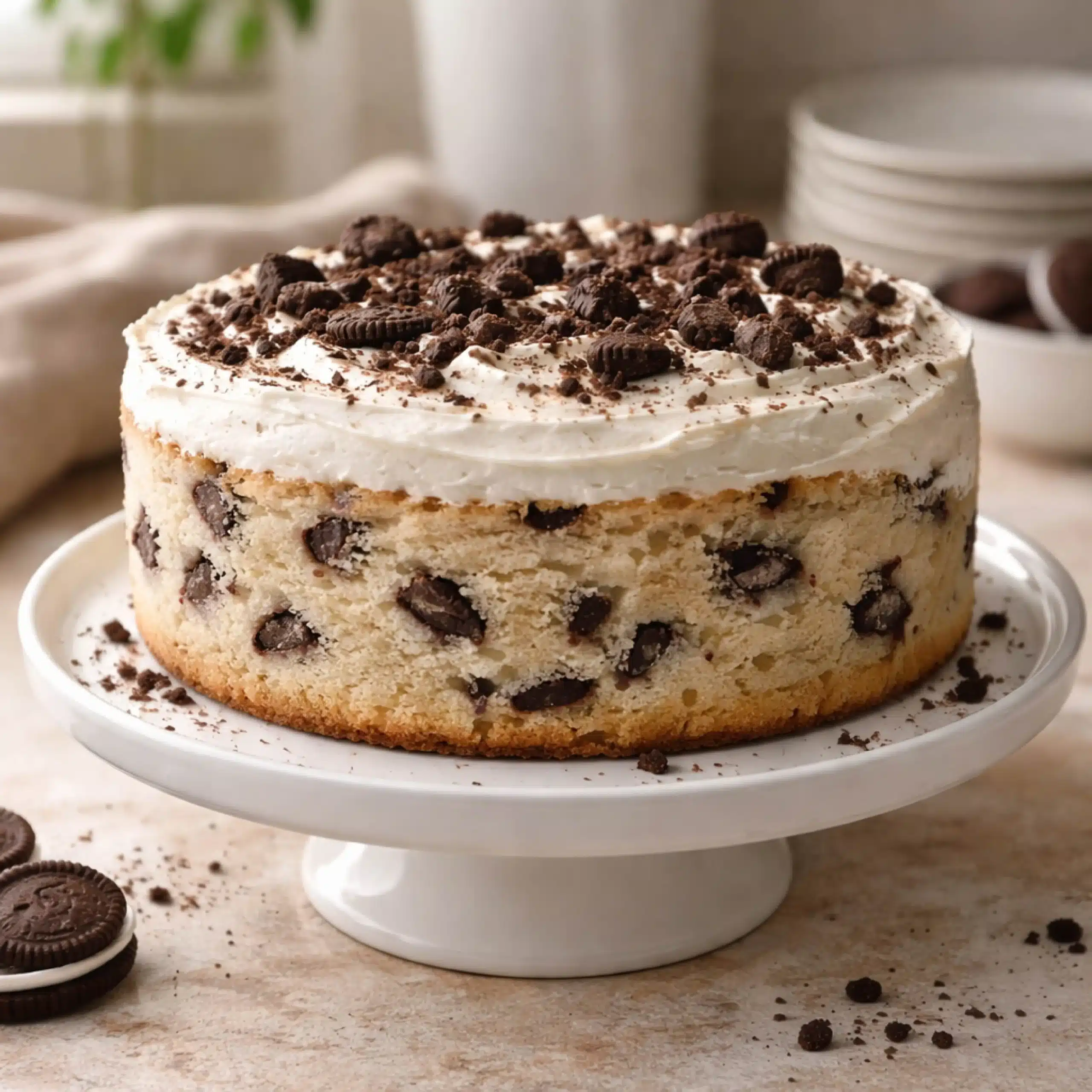
Cookies and cream cake still takes me right back to a quiet afternoon in my kitchen when the kids were finally distracted and the house felt still. I remember twisting sandwich cookies apart on the counter, not because a recipe told me to, but because it slowed me down. Baking has always been my reset button. When life feels loud, making this kind of cake gives me something steady to focus on. I don’t always want layers or decorations. Sometimes I just want a familiar dessert in the oven that smells comforting and doesn’t demand much from me.
Print
Cookies and Cream Cake
- Total Time: 50 minutes
- Yield: 10 slices
Description
This cookies and cream cake is soft, light, and built for real life. Crushed sandwich cookies are folded gently into a tender vanilla batter, then topped with simple vanilla frosting. It’s the kind of cake that doesn’t demand perfection but still delivers every time.
Ingredients
For the Cake
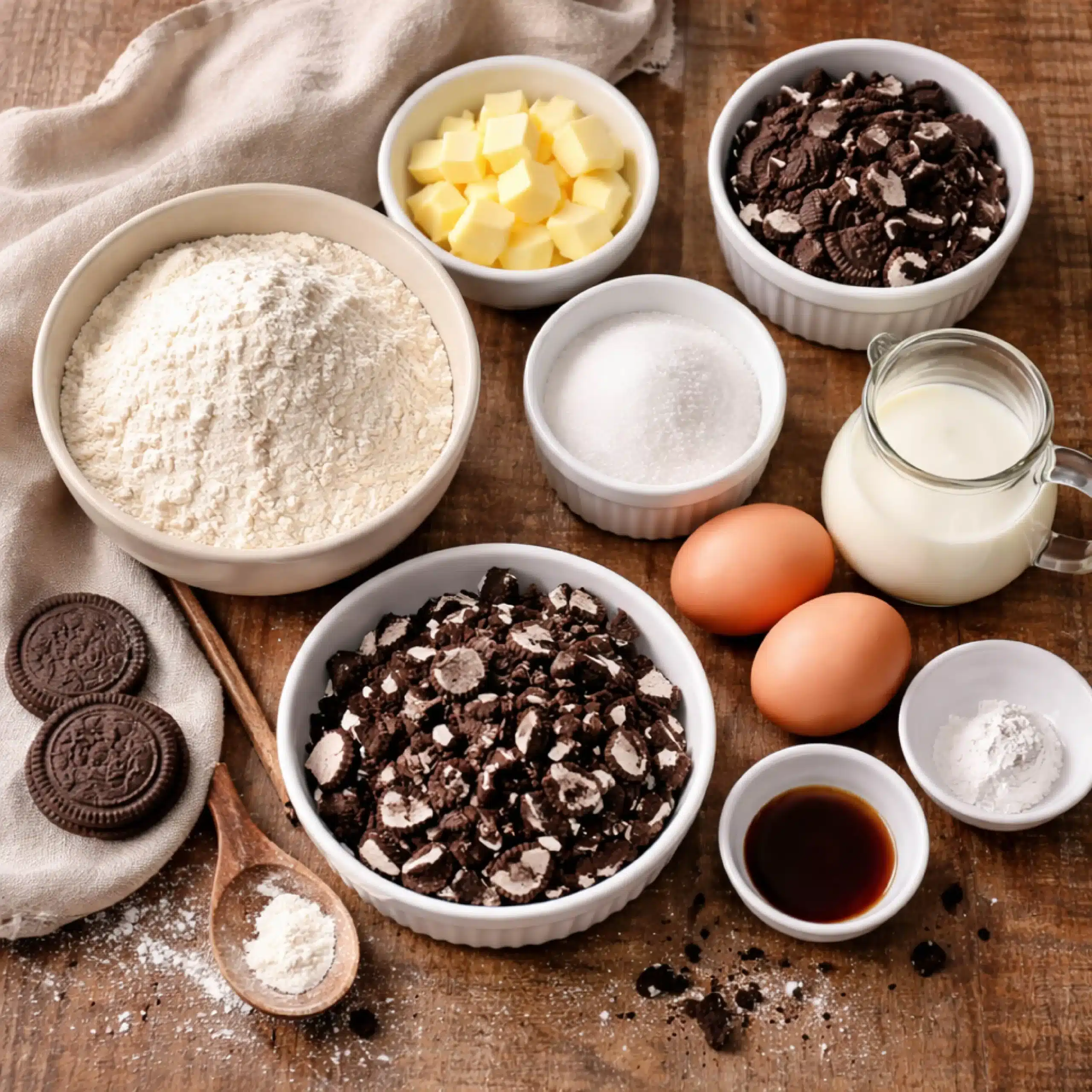
2 cups all-purpose flour
1½ cups granulated sugar
½ cup unsalted butter, softened
2 large eggs, room temperature
1 cup milk
2 teaspoons baking powder
1 teaspoon vanilla extract
12 sandwich cookies, roughly broken by hand
For the Frosting
½ cup unsalted butter, softened
2 cups powdered sugar
1 teaspoon vanilla extract
2–3 tablespoons milk or cream
4–5 sandwich cookies, crushed (optional)
Instructions
Preheat your oven to 350°F (175°C). Grease a 9-inch round cake pan and line the bottom with parchment paper.
In a large bowl, cream the butter and sugar together until light and fluffy.
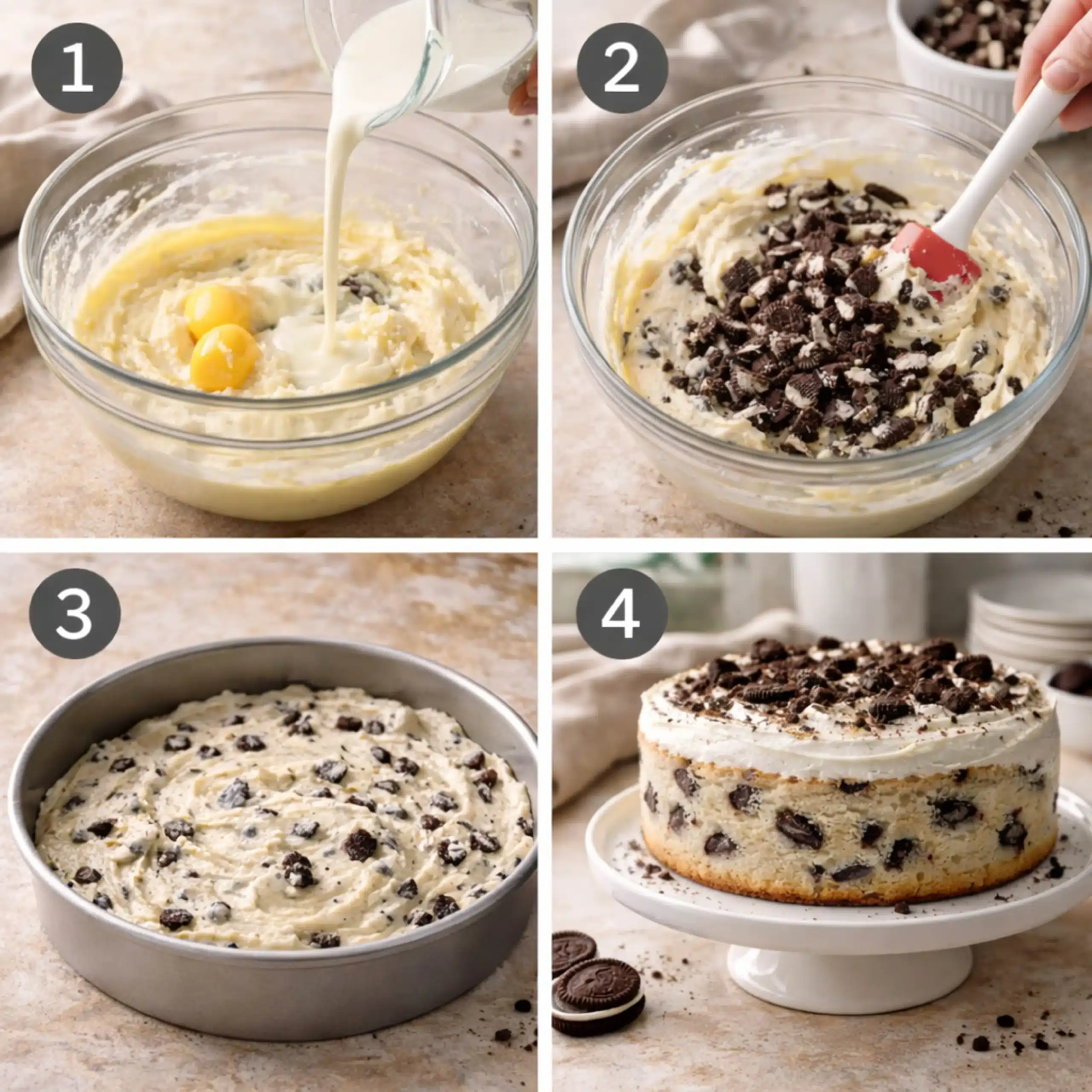
Add the eggs one at a time, mixing just until combined. Stir in the vanilla extract.
In a separate bowl, whisk together the flour and baking powder.
Add the dry ingredients to the batter in alternating additions with the milk, mixing just until the batter comes together.
Gently fold in the broken cookie pieces by hand using a spatula.
Pour the batter into the prepared pan and smooth the top.
Bake for 30–35 minutes, or until the top springs back lightly and a toothpick inserted in the center comes out with a few moist crumbs.
Let the cake cool in the pan for 10–15 minutes, then turn out onto a wire rack to cool completely.
To make the frosting, beat the butter until smooth. Add powdered sugar, vanilla, and milk gradually until soft and spreadable. Fold in crushed cookies if using.
Frost the cooled cake and finish with extra cookie crumbs if desired.
Notes
Avoid double-stuffed cookies — the extra filling can weigh down the cake.
Fold the cookies in by hand to keep the batter light.
A few moist crumbs on the toothpick means the cake is done.
- Prep Time: 15 minutes
- Cook Time: 35 minutes
- Category: Dessert
- Method: Baking
- Cuisine: American
Table of Contents
Why This Cookies and Cream Cake Works So Well
What makes this cake different
This cookies and cream cake is built for real life, not perfection. The crumb stays soft and light even with cookie pieces folded into the batter, which is harder to pull off than it looks. A lot of cakes with mix-ins end up heavy because the balance is off. I’ve baked plenty of those, and they’re never the ones people ask for again.
Here, the vanilla base carries the flavor while the cookies add contrast instead of weight. You still get that familiar cream-and-cookie taste, but the texture stays tender. It slices clean, holds together, and doesn’t dry out by the next day. That matters more to me than how tall it looks.
Choosing the right cookies
Standard sandwich cookies work best for this recipe. I avoid double-stuffed versions because the extra filling changes the texture and makes the cake feel dense. It sounds small, but it makes a difference.
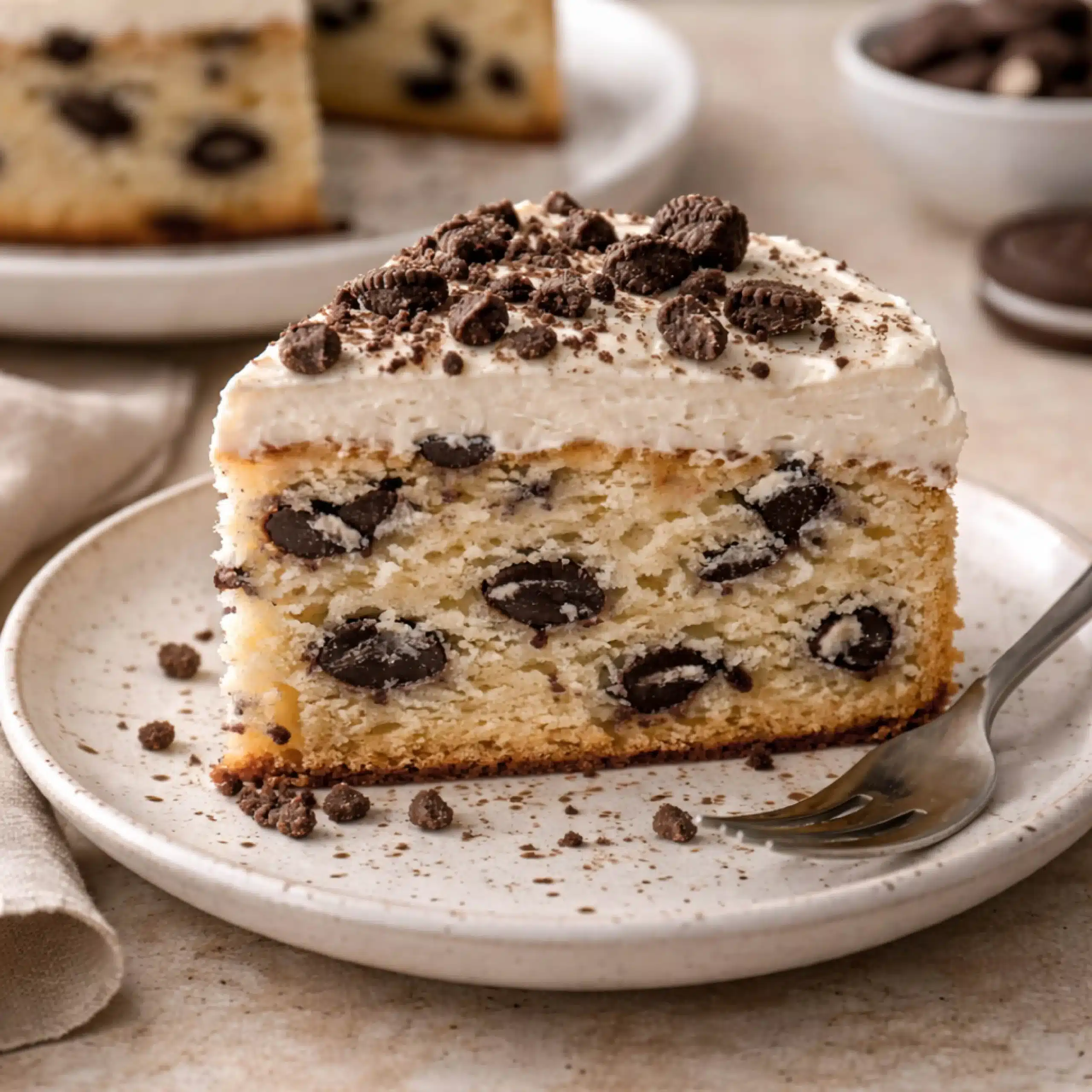
I’m also not loyal to one brand. Whatever I have on hand usually works just fine. I always fold the cookie pieces in by hand. A mixer breaks them down too much and turns the batter gray. I like seeing small pockets of cookie when I cut into the finished cake. It feels intentional, even if the process itself is relaxed.
That’s really why this cookies and cream cake has stayed in my rotation. It’s simple, dependable, and forgiving. Some days, that’s exactly what I want. If you love desserts that lean heavily into cookie flavor, my cookie cake is another fun option.
Getting the Texture Just Right
How the cookie pieces affect the crumb
Texture is where a cookies and cream cake either works or completely misses the mark. I pay close attention here. The cookie pieces shouldn’t be so large that they sink, and they shouldn’t be crushed into dust either. When they’re sized correctly, they stay suspended in the batter and bake evenly into the crumb. That balance is what keeps a cookies and cream cake soft instead of patchy or heavy.
I usually break the cookies by hand instead of chopping them with a knife. It gives me more control, even if it looks a little messy. Some pieces end up bigger, some smaller, and I actually prefer it that way. A perfectly uniform mix feels off to me. This cake should look homemade. That’s part of its charm.
I’ve crushed them too finely before. The batter turned gray, the texture tightened, and the flavor flattened. It was still edible. It just wasn’t the cookies and cream cake I wanted.
Mixing without overdoing it
This step always reminds me to slow down. Once the dry ingredients are added, I mix just until everything comes together. Overmixing is the fastest way to ruin the base of a cookies and cream cake. I’ve done it while multitasking, and the result is never great.
I fold the cookie pieces in last, gently, with a spatula. Not because it’s fancy, but because it works. The batter stays light, and the cookies keep their shape. That’s how a cookies and cream cake keeps its soft bite instead of turning dense.
Some days I want to rush this part. I don’t anymore. This is one of those moments where a little patience quietly pays off.
Baking and Pan Choices That Matter
Choosing the right pan size
Pan size plays a bigger role than most people expect. I’ve baked this cookies and cream cake in different pans over the years, usually depending on what was clean. A standard 9-inch round pan gives the most even bake. The batter has enough room to rise without spilling over or drying out at the edges.
If you use a smaller pan, the center takes longer to set. That’s when the edges overbake, and the texture suffers. I’ve scraped around those edges more times than I want to admit. It still tastes good, but it’s not ideal. A lighter-colored pan also helps. Dark pans tend to brown the sides too quickly, especially with cookie pieces inside.
I grease the pan well and line the bottom. Always. Skipping that step once was enough for me.
Knowing when it’s done
This cake doesn’t give you a dramatic signal when it’s ready. The top should look set, lightly golden, and spring back when touched. I check the center with a toothpick, but I don’t expect it to come out perfectly clean. A few moist crumbs are exactly what I want.
Overbaking dries out a cookies and cream cake faster than almost anything else. I start checking early and trust my instincts more than the timer. If the kitchen smells sweet and familiar, I know I’m close.
I let the cake cool in the pan for a bit before turning it out. Rushing that step has caused cracks before. It still gets eaten, but I notice. I always notice.
Frosting and Serving Without Overthinking It
Keeping the frosting simple
I’ve tried fancy frostings here, and I always come back to something basic, similar to the approach I use in my buttercream cake recipes. A soft vanilla buttercream just works. It doesn’t compete with the flavor already in the cake. Instead, it supports it. When the frosting gets too sweet or too heavy, the whole thing feels like too much.
For this cookies and cream cake, I usually crush a small handful of cookies and fold them into the frosting by hand. Not finely. I want texture. Sometimes I leave the frosting plain and sprinkle cookie crumbs on top instead. It depends on my mood. I don’t think there’s a wrong choice here.
I also don’t stress about making it perfect. Swirls are uneven. The sides aren’t smooth. That’s fine. I’m not trying to impress anyone. I just want it to taste good.
Serving and storing leftovers
This cake slices best once it’s fully cooled, but I won’t pretend I always wait. Warm cake with frosting sliding a little? Still good. Maybe better. I usually serve smaller slices because it’s rich, even though it looks simple.
Leftovers keep well covered on the counter for a day or two. After that, I move it to the fridge. I let slices come back to room temperature before serving again. Cold cake dulls the flavor. I’ve learned that the hard way.
I reach for this cookies and cream cake when I want something familiar on the table. No stress. No second-guessing. Just a dessert that feels steady, even when everything else isn’t.
Frequently Asked Questions About Cookies and Cream Cake
Can I use other kinds of Oreos?
Yes, you can. I usually stick with the classic ones because I know exactly how they behave in the batter. That said, flavored versions work too. Just know that anything with extra filling or coatings can change the texture slightly. I don’t mind that on casual baking days, but for a reliable cookies and cream cake, the basics are still my favorite.
How small should I chop the Oreos that get folded into the cake?
I aim for rough chunks, about the size of a dime. Too big and they sink. Too small and they disappear. I break them by hand most of the time. It’s faster, and I like the uneven look. Perfectly chopped pieces feel a little too controlled for this kind of cake.
Can I make this as a layer cake?
Absolutely. I’ve made this cookies and cream cake as a two-layer version many times. Just divide the batter evenly and keep an eye on bake time since thinner layers cook faster.
A Cozy Wrap-Up
This cake has a way of showing up when I need something dependable in the kitchen. It doesn’t ask for perfection or fancy tools. It just works, and sometimes that’s enough. If you try it, I’d love to see how it turns out for you. I share behind-the-scenes baking moments and tips over on my Facebook page, and I save all my favorite cake ideas on Pinterest too. Those spaces feel like an extension of my kitchen table, and you’re always welcome there.