
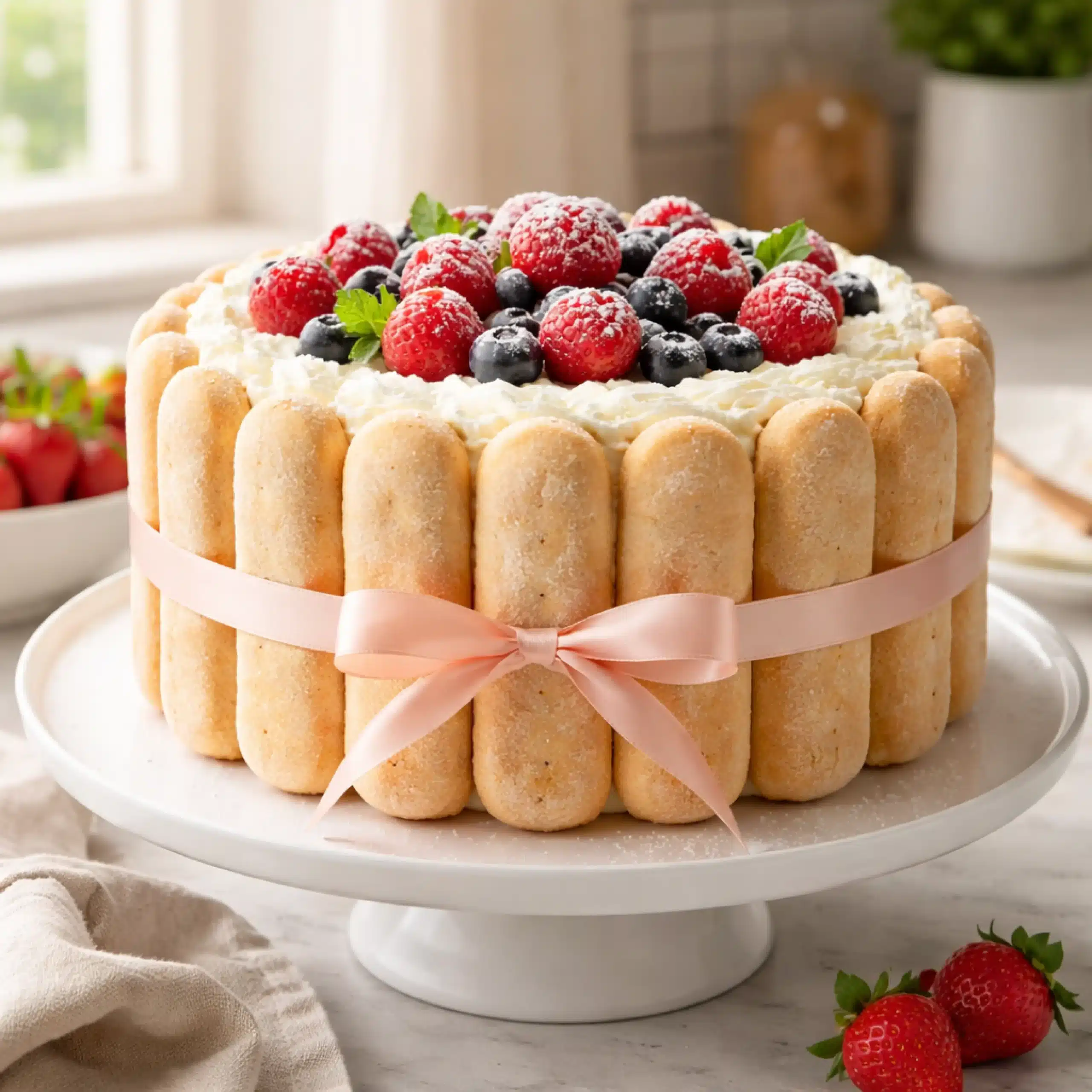
Charlotte Cake was one of the first desserts that made me feel brave again in the kitchen. I remember standing in my own small kitchen, kids running in and out, thinking about my grandmother’s calm hands lining a pan without measuring twice. I didn’t have time for anything fancy that day. Still, I wanted something that felt meaningful. This cake did that for me. It looks impressive, but it doesn’t demand perfection. That balance matters to me more than I admit. Some days, baking needs to feel gentle.
Print
Charlotte Cake
- Total Time: 6 hours 25 minutes
- Yield: 8 slices
Description
A classic Charlotte Cake made with ladyfingers, a soft vanilla cream filling, and fresh berries. This no-bake dessert looks elegant but comes together gently, making it perfect for busy days or make-ahead occasions.
Ingredients
For the Charlotte Cake
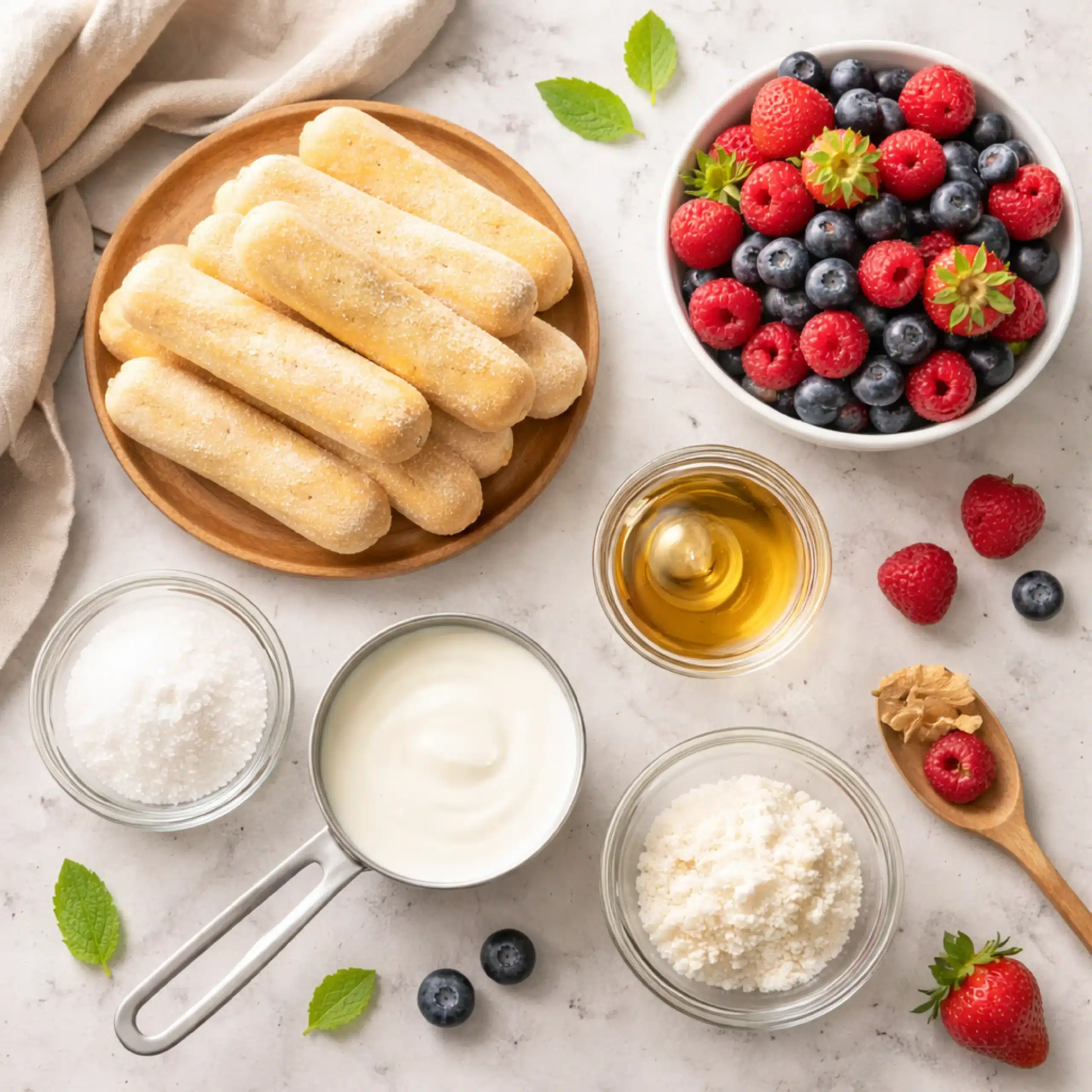
1 package ladyfingers (about 24–30)
2 cups heavy whipping cream, cold
1/3 cup granulated sugar
1 teaspoon vanilla extract
1 teaspoon powdered gelatin
2 tablespoons cold water
2 cups fresh berries (strawberries, raspberries, blueberries, or a mix)
Instructions
Lightly grease an 8-inch springform pan. Line the sides with ladyfingers, standing them upright with the rounded sides facing out. Trim bottoms if needed so they stand evenly.
Sprinkle gelatin over cold water in a small bowl and let it bloom for 5 minutes. Gently warm until fully dissolved. Set aside to cool slightly.
In a large bowl, whip the cold heavy cream with sugar and vanilla until soft peaks form.
Slowly pour the cooled gelatin into the whipped cream while mixing on low speed. Mix just until combined.
Spoon a layer of cream into the lined pan. Add a layer of berries, then repeat with another layer of cream.
Smooth the top gently with a spatula.
Cover and refrigerate for at least 6 hours, preferably overnight, until fully set.
To serve, carefully remove the springform ring. Slice and serve chilled.
Notes
Don’t overwhip the cream. Soft peaks give the best texture.
Pat berries dry before layering to prevent excess moisture.
This cake slices best when fully chilled.
- Prep Time: 25 minutes
- Cook Time: 0 minutes
- Category: Dessert
- Method: No-Bake
- Cuisine: European
Table of Contents
What Is a Charlotte Cake, Really?
The basic structure of a Charlotte Cake
At its heart, a Charlotte Cake is a molded dessert made with ladyfingers and a soft filling. The ladyfingers line the sides and sometimes the base, creating a neat shell that holds everything together. Inside, you’ll usually find a mousse, custard, or cream-based filling, similar to Bavarian Cream Filling. Fruit shows up often, especially berries.
What makes this cake different is that it’s assembled, not baked. That alone takes a lot of pressure off. You’re building layers instead of worrying about oven temperatures or cracked tops. I appreciate that more than I probably should.
Traditionally, the ladyfingers stand upright, which gives the finished cake that instantly recognizable look. It’s tidy, a little old-fashioned, and quietly elegant. No frosting tricks required.
Why this cake feels easier than it looks
A Charlotte Cake has a reputation for being fancy, but the process is surprisingly forgiving. The ladyfingers act like a frame. If the filling isn’t perfectly smooth, no one sees it. If the fruit layer isn’t even, it still tastes good.
This is also a make-ahead dessert, which matters in real life. You assemble it, chill it, and walk away. That pause time does a lot of the work for you.
I’ll be honest. I like desserts that rest in the fridge while I deal with everything else. This one understands that kind of day.
The Story Behind the Name and Style
How this dessert earned its name
The Charlotte Cake carries a name that feels a little formal, which might be why people assume it’s complicated. In reality, the name comes from much earlier versions of the dessert that were far more rustic than what we see today. The earliest charlottes were simple molds lined with bread or sponge and filled with cooked fruit. Apples were common. Nothing fancy.
Over time, as European pastry evolved, so did the structure. Bread became ladyfingers. Warm fillings shifted to chilled creams. The name stayed, even though the dessert itself softened into something more elegant. I like that contrast. It reminds me how recipes grow without losing their roots.
There’s also a strong belief that the name connects to Queen Charlotte of England. Whether that’s fully true doesn’t change how the cake feels now. It still carries a quiet, classic energy.
How French pastry shaped the modern version
The version most of us recognize today was refined in France, where presentation mattered just as much as flavor. That’s when the upright ladyfingers became standard, creating the clean, structured look we associate with a Charlotte Cake now.
This shift also made the dessert more flexible. Cold-set fillings meant better texture and easier timing. You could assemble it early and serve it later without stress.
I’ll admit something. I trust desserts that have survived this long. They usually do because they work, not because they’re trendy.
Charlotte Cake Filling Options That Work in Real Life
Creamy centers that hold their shape in a Charlotte Cake
The filling is where a Charlotte Cake really becomes personal. This dessert relies on a soft but stable center, most often made with whipped cream, including options like Vegan Whipped Cream. A small amount of gelatin helps everything set, but it shouldn’t feel firm or rubbery. I’ve pushed that line before, and I didn’t love the result.
For everyday baking, I prefer a vanilla-based cream for my Charlotte Cake. It spreads easily, forgives pauses, and chills without drama. Chocolate versions taste great, but they demand attention at every step. Some afternoons, I’m not in the mood for a high-maintenance dessert.
The goal is contrast. The filling should feel airy next to the structure of the ladyfingers. When a Charlotte Cake is done right, every slice feels soft but still holds together.
Fruit layers that complement the Charlotte Cake structure
Fruit brings balance to a Charlotte Cake, especially when the filling is rich. Berries are the most common choice because they’re flavorful without releasing too much liquid , which is why desserts like Strawberry Whipped Cream Cake feel naturally familiar here. Strawberries, raspberries, and blueberries all behave well once chilled.
I tend to layer fruit instead of mixing it fully into the cream. It keeps the texture cleaner and makes slicing easier. Too much juice can soften the ladyfingers faster than expected, which changes the final shape.
A Charlotte Cake doesn’t need a lot of fruit to shine. A thin layer is usually enough. More isn’t always better here.
Assembling a Charlotte Cake Without Overthinking It
Building the Charlotte Cake step by step
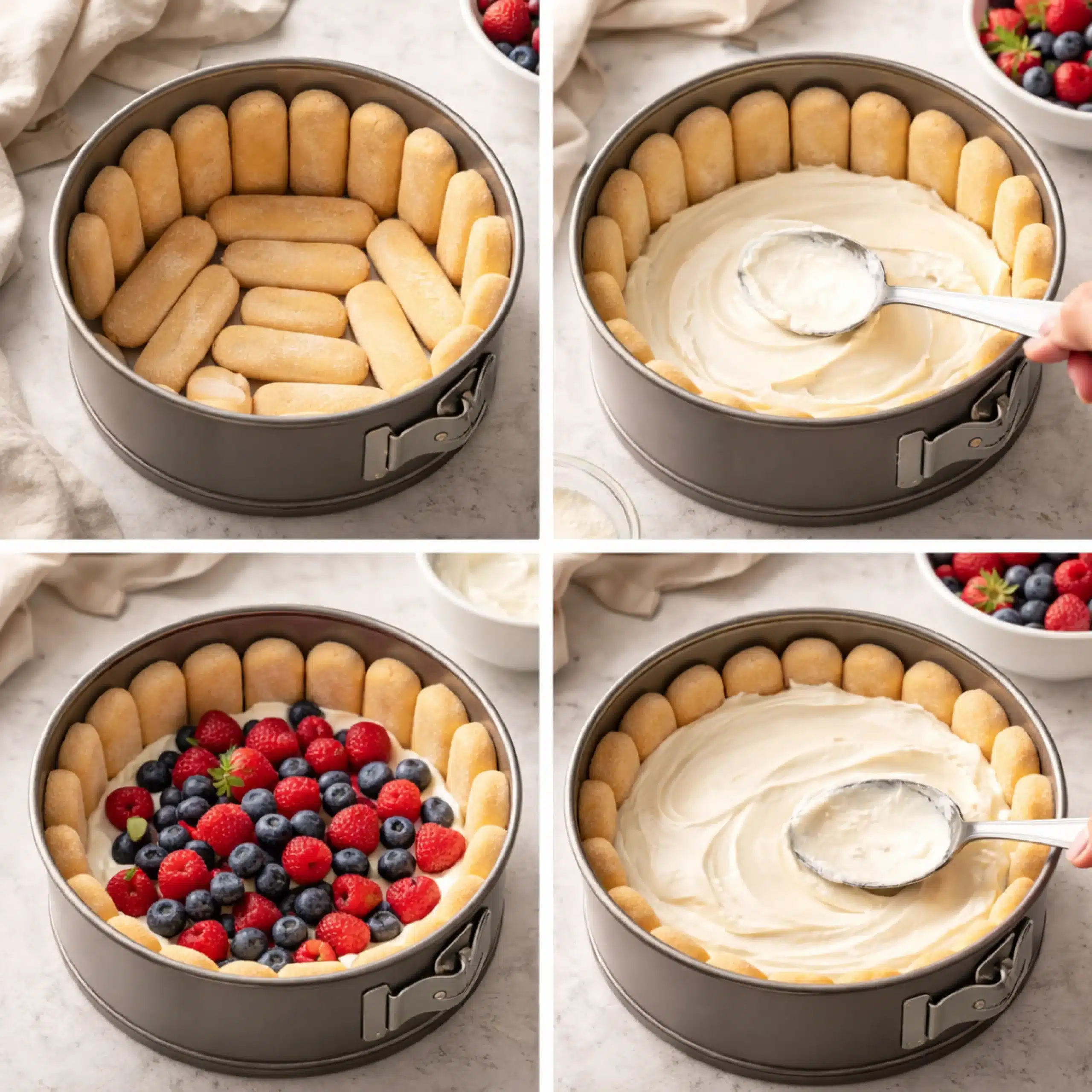
Assembling a Charlotte Cake looks intimidating, but the process is mostly about placement, not precision. Start by lining the pan with ladyfingers, rounded sides facing out. They don’t need to fit perfectly. Small gaps disappear once everything sets.
I usually trim the bottoms slightly so the ladyfingers stand upright. Sometimes I skip it. Both ways work. This part of the Charlotte Cake is more flexible than most recipes admit.
Once the sides are in place, fill the center in layers. Cream, fruit, cream again. A gentle tap on the counter helps everything settle. Then cover and chill. Time does the rest.
Chilling, unmolding, and serving with confidence
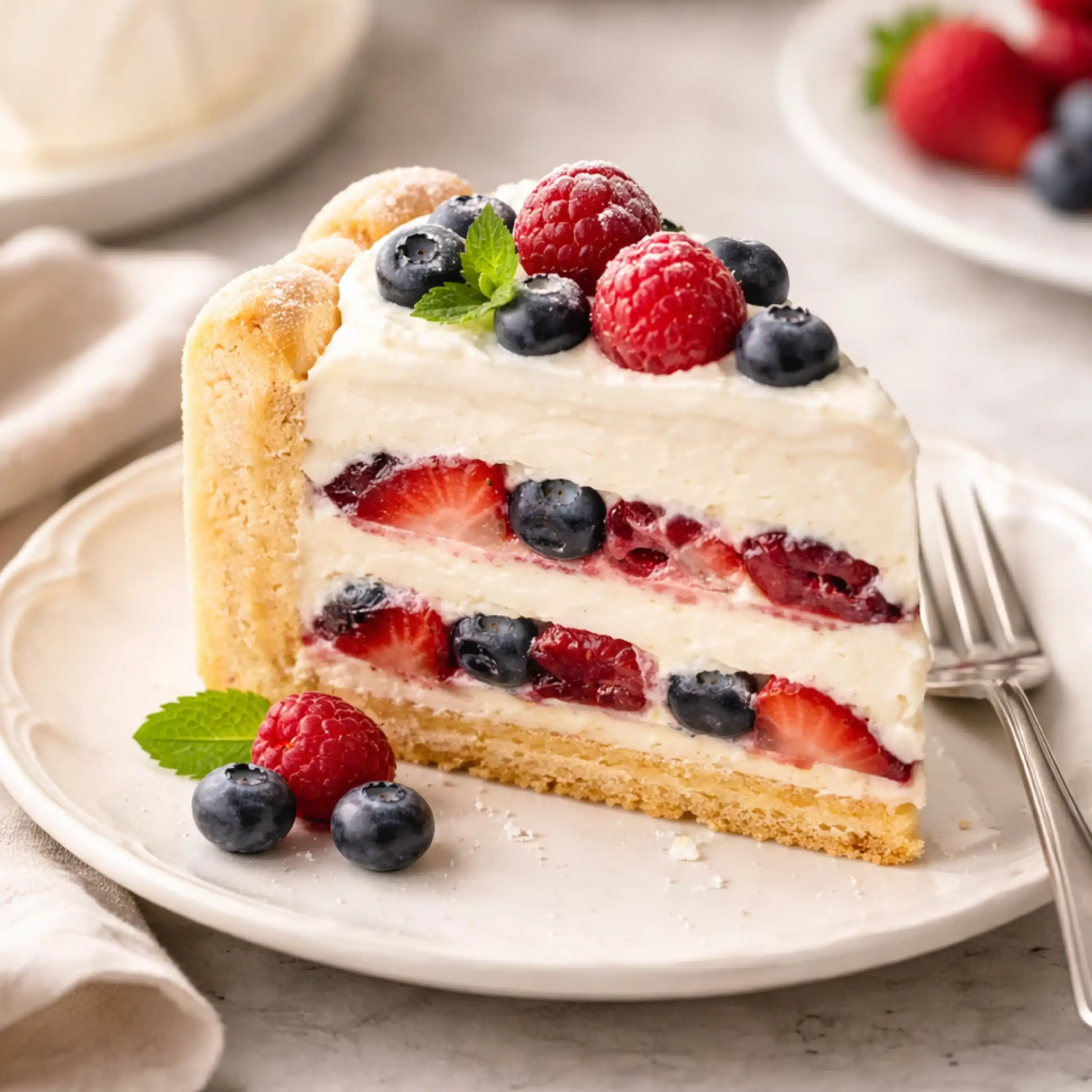
Chilling is not optional for a Charlotte Cake. It needs several hours, ideally overnight, to fully set. This waiting period makes unmolding clean and stress-free.
To release the cake, run a thin knife around the edge if needed, then lift it out slowly. I always pause here. It’s my least favorite moment. Still, it works more often than not.
Serve the Charlotte Cake cold, with simple garnishes if you like. Fresh berries or a light dusting of powdered sugar are enough. The structure already speaks for itself.
Frequently Asked Questions
What is Charlotte cake made of?
A Charlotte Cake is made with ladyfingers that line a mold and a soft filling inside. The filling is usually a mousse, whipped cream, or custard-style base. Fruit is common, especially berries. The cake sets in the refrigerator instead of the oven, which gives it that clean, sliceable shape.
Why is it called a Charlotte cake?
The name Charlotte Cake is believed to come from early European desserts associated with Queen Charlotte of England. Those early versions often used cooked apples. Even though the ingredients have changed over time, the name stayed and became tied to the molded style we know today.
What was Princess Diana’s favorite cake?
Princess Diana was widely known to love bread-and-butter pudding rather than a Charlotte Cake. It was a simple, comforting dessert, which honestly makes sense to me. Fancy cakes are lovely, but familiar ones often mean more.
Final Thoughts
There’s something quietly comforting about making a Charlotte Cake. It looks special, but it doesn’t ask you to rush or perform. It waits patiently in the fridge while life keeps moving, and that alone makes it worth returning to. I still feel a small sense of pride every time I unmold one, even now. If you enjoyed this recipe, I’d love for you to follow along on my Facebook page for everyday baking moments and on Pinterest for saved cake ideas you can come back to later. Baking should feel like that—something you return to when you’re ready.