
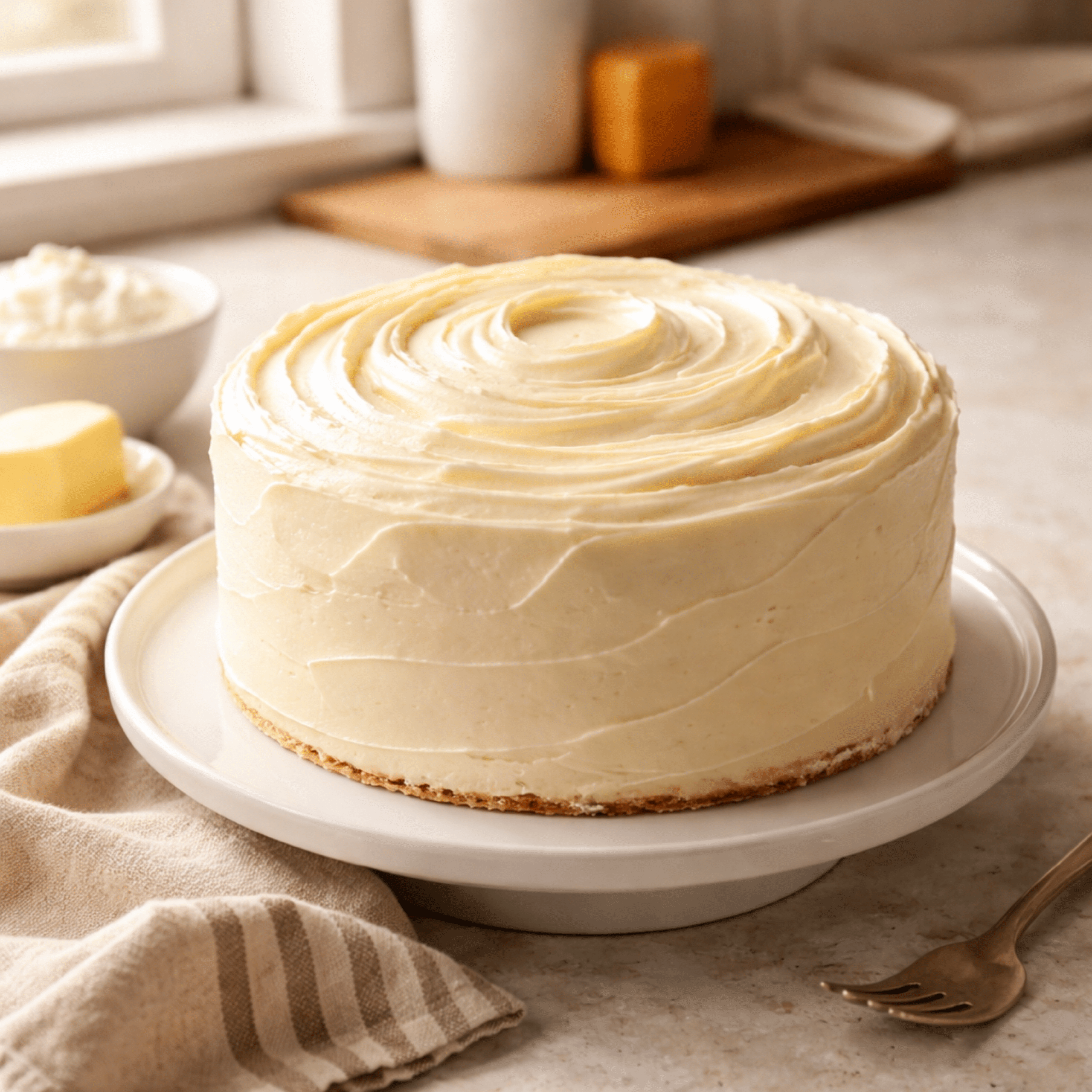
Buttercream Cake takes me right back to standing on a stool in my grandmother’s kitchen, watching frosting swirl slowly in a chipped ceramic bowl while the oven hummed behind us. I didn’t know measurements then. I just knew the frosting was soft, sweet, and somehow forgiving. Years later, as a busy mom baking between school pickups and dinner prep, that memory still guides me. I don’t chase perfection. I chase cakes that feel doable, even on tired days. This is one of those moments where baking feels calm again. Not impressive. Just right.
Understanding a Buttercream Cake From the Inside Out
What Makes This Cake So Familiar
A buttercream cake isn’t about flash. It’s about comfort. The frosting is rich but gentle, sweet without being loud, and smooth enough to hide a few uneven edges. That’s probably why so many of us reach for it when we want a cake that feels safe. Birthdays, graduations, random Tuesdays. It works because it doesn’t demand anything fancy from you.
I’ll be honest. I used to think buttercream had to be perfect to be good. Smooth sides. Sharp edges. That belief slowed me down for years. Eventually, I let that go. The cakes tasted better after that. Or maybe I just relaxed.
What really matters is balance. Soft cake layers. Frosting that spreads easily. Nothing fighting for attention.
The Role Buttercream Plays in the Whole Cake
Buttercream isn’t just decoration. It’s structure, flavor, and forgiveness all in one. It fills gaps between layers, covers small cracks, and holds everything together when your cake isn’t bakery-perfect. And most home cakes aren’t. Mine rarely are.
The reason a buttercream cake works so well for home bakers is simple: the frosting adjusts to you. Too thick? Add a splash of cream. Too soft? Chill it for a few minutes. It gives you room to breathe.
Some days I prefer it slightly softer, even if it means rustic edges. I like that look. It feels honest. Not every cake needs to look finished. Some just need to taste good and make people pause between bites.
When you understand that, baking gets easier. You stop fighting the process and start enjoying it.
Choosing the Right Cake for a Buttercream Cake
Why Cake Texture Matters With Buttercream Cake
A Buttercream Cake only works when the cake underneath can support it. I didn’t always understand that. I once frosted a delicate layer cake that crumbled the moment the knife touched it, and the whole thing leaned like it was tired. That’s when it clicked. Buttercream needs a partner, not something fragile.
For a reliable Buttercream Cake, the texture should be soft but grounded. Moist, yes. Airy, not too much. When the crumb has just enough strength, the frosting spreads smoothly and stays where you put it. That balance makes decorating feel calmer, even if you’re rushing.
I’ll say this plainly. I avoid ultra-light sponge cakes when I’m making a Buttercream Cake. They taste fine, but the frosting feels heavy on them. That’s my preference, and I’ve stopped apologizing for it.
Cakes That Pair Best With Buttercream
Classic flavors shine here. Vanilla, chocolate, and yellow cake are dependable choices for a Buttercream Cake because they don’t compete with the frosting. Instead, they support it. Moisture matters more than flavor complexity. A dry cake can ruin the experience fast.
Layer size plays a role too. Taller layers need slightly firmer buttercream to keep everything steady. Shorter layers are more forgiving. Over time, you start adjusting without thinking about it. That’s usually when baking feels easier.
When the cake and frosting work together, a Buttercream Cake stops feeling stressful. It becomes familiar. Comfortable. Something you trust.
Making Buttercream That Actually Works at Home
How Buttercream Comes Together
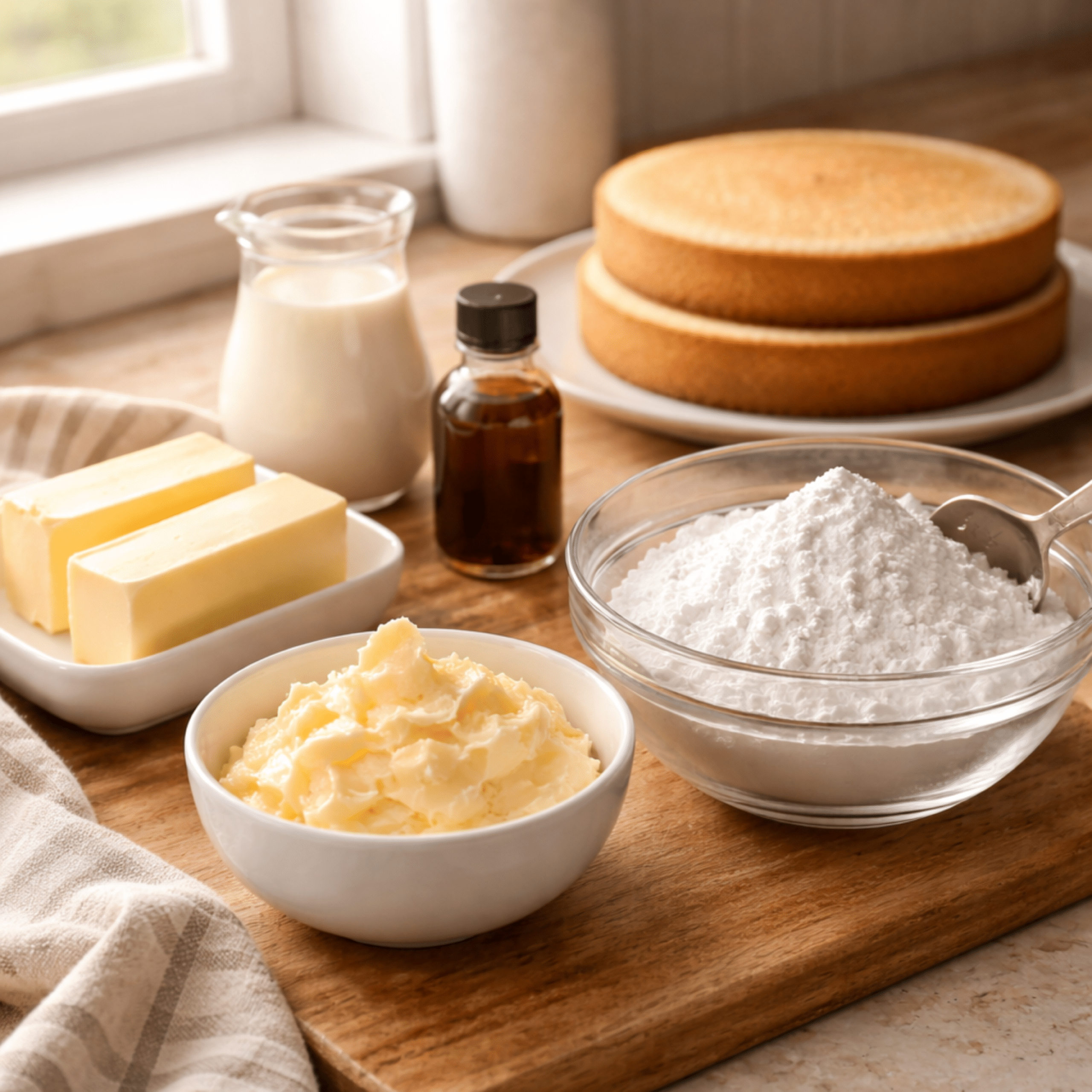
This is where a Buttercream Cake can either feel effortless or oddly frustrating. Buttercream itself is simple, but timing and texture matter more than people admit. Soft butter. Fully cooled cakes. A quiet kitchen helps too, honestly.
When I make buttercream, I don’t rush the mixing. I let the butter get truly soft, not melty, not cold. That one detail changes everything. Powdered sugar goes in slowly. I stop and scrape the bowl more than I think I need to. It’s not about precision. It’s about paying attention.
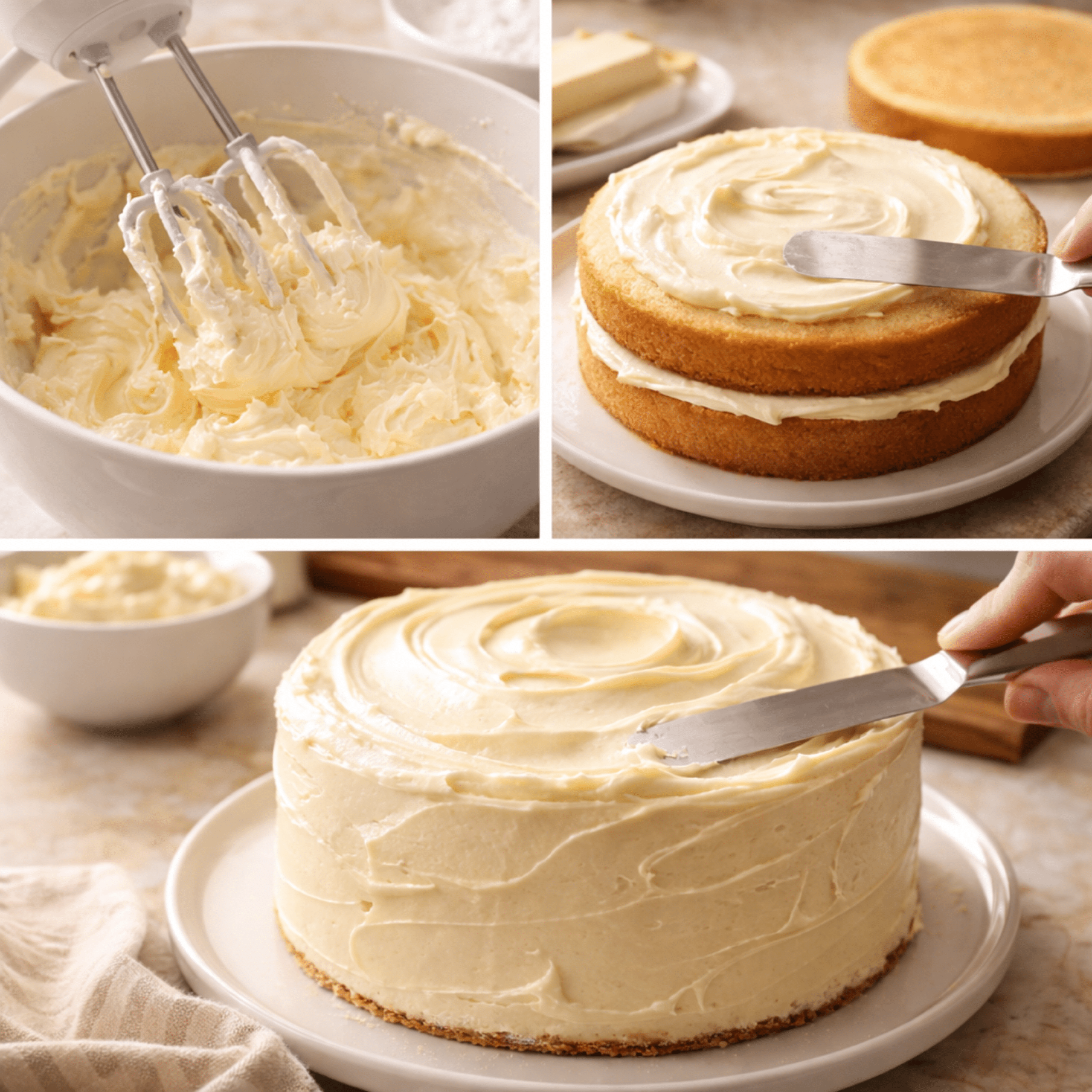
For a Buttercream Cake, the frosting should spread without resistance. If it fights you, something’s off. Usually it just needs a tablespoon of cream or milk. Sometimes it needs a few minutes in the fridge. Buttercream is flexible like that.
I prefer mine slightly less sweet than most recipes suggest. That’s a choice I make every time, even when I know it’s not traditional.
Common Buttercream Problems (and Why They’re Normal)
Grainy texture. Too soft. Too stiff. Every Buttercream Cake baker runs into these at some point. None of them mean you failed. They just mean buttercream is reacting to temperature, humidity, or impatience.
If it looks broken, keep mixing. If it’s too loose, chill it briefly. If it’s too thick, add liquid slowly. These fixes sound simple because they are. Experience makes them feel instinctive.
One thing I’ve learned is not to overwork buttercream. Once it’s smooth and spreadable, stop. Over-mixing adds air and makes frosting unpredictable.
A Buttercream Cake doesn’t need perfect frosting to be good. It needs frosting that behaves well enough to let you finish the cake without stress.
Decorating and Serving a Buttercream Cake Without Overthinking It
Simple Decorating That Feels Achievable
This is the stage where a Buttercream Cake can start to feel intimidating, especially if you’ve seen too many flawless bakery photos. I’ve learned to step back from that. Most of my cakes are finished with a simple offset spatula and whatever patience I have left that day.
Smooth sides are nice, but they’re optional. Soft swirls, gentle waves, or even visible spatula marks still look inviting. Buttercream hides more than you think. It fills small gaps. It covers uneven layers. That’s part of why a Buttercream Cake works so well at home.
Some days I stop decorating sooner than planned. I leave the edges a little rough. I’ve never once had someone complain. Not even quietly.
How and When to Serve It
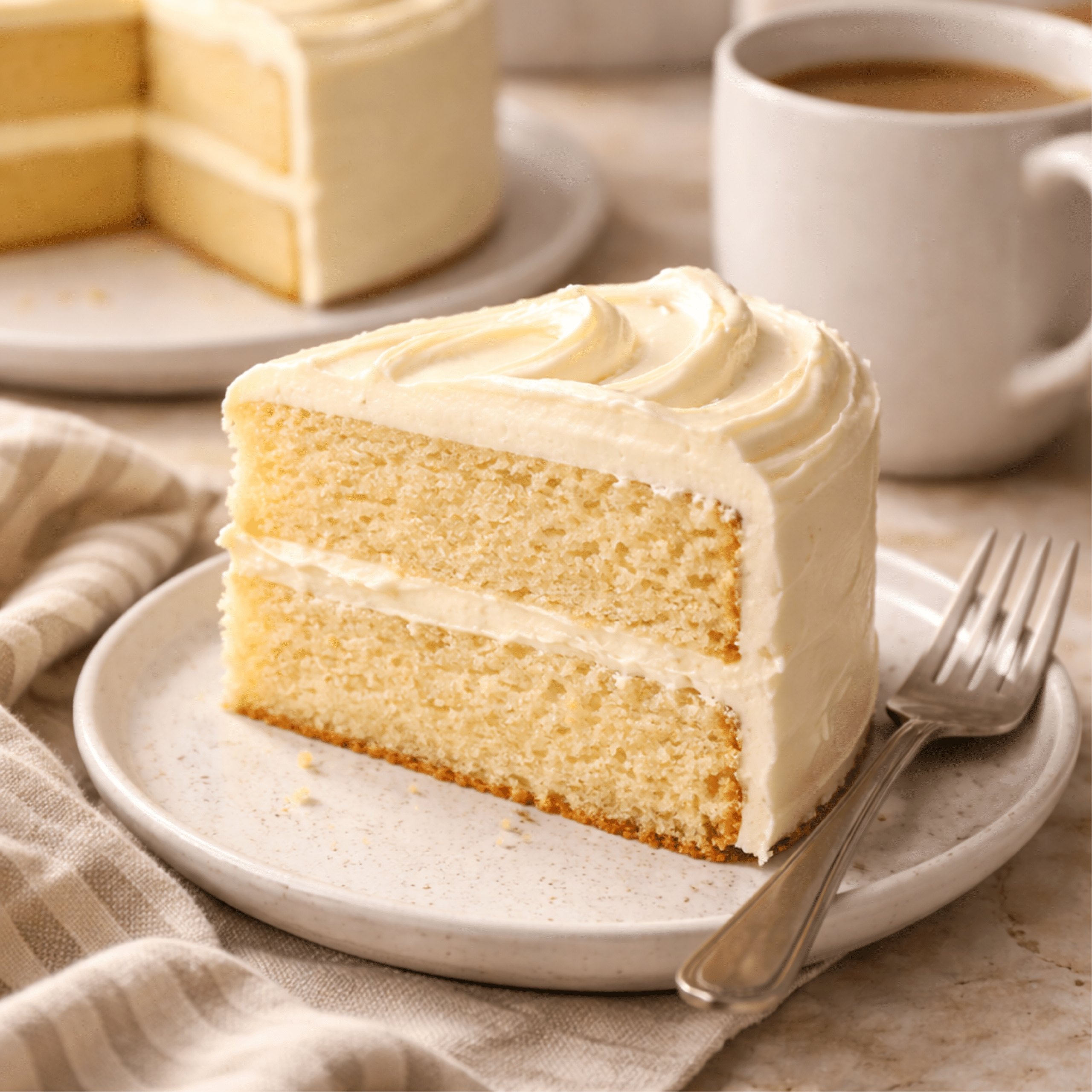
A Buttercream Cake tastes best when it isn’t ice-cold. I usually let it sit out for a bit before serving so the frosting softens and the flavors come through. Straight from the fridge, buttercream can feel firm and muted.
If you’re making it ahead, that’s fine. Buttercream holds up well. Just cover it and give it time to relax before slicing. The texture changes in the best way.
I’ll say this honestly. I prefer leftover Buttercream Cake the next day. The frosting settles. The cake feels softer. It’s calmer somehow.
That’s when I sneak a slice in the morning with coffee, standing at the counter, before the house wakes up.
Frequently Asked Questions About Buttercream Cake
What is buttercream on a cake?
Buttercream on a cake is a smooth, creamy frosting made primarily from butter and powdered sugar. On a Buttercream Cake, it acts as both filling and finish. It seals in moisture, adds sweetness, and gives the cake its familiar soft bite. It’s less about decoration and more about comfort, at least in my kitchen.
How do you make buttercream for cakes?
Buttercream is made by creaming softened butter and gradually mixing in powdered sugar, then adjusting the texture with cream or milk. For a Buttercream Cake, I usually mix slowly and stop as soon as it spreads easily. I don’t aim for stiff peaks. I aim for calm frosting that listens.
Why is buttercream so expensive?
Buttercream can be expensive because butter itself costs more than shortening or whipped toppings. A Buttercream Cake uses a lot of it, especially for layered cakes. Quality butter changes the flavor, though. I notice it every time, even when I wish I didn’t.
What cake is best with buttercream?
Moist, sturdy cakes work best. Vanilla, chocolate, and yellow cake are classic choices for a Buttercream Cake because they hold layers well and don’t compete with the frosting. I usually skip very delicate cakes. They stress me out.
Buttercream cake doesn’t have to feel complicated or intimidating. When you keep it simple and let yourself enjoy the process, it becomes the kind of recipe you come back to again and again. That’s always been my goal here — baking that fits into real life and still feels special.
If you enjoyed this recipe, I’d love for you to follow along for more cozy, reliable baking ideas. You can find PinkHeartCake on Facebook for everyday baking inspiration and on Pinterest for step-by-step cake ideas you can save and come back to anytime.
Print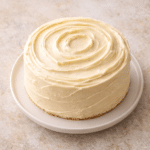
Buttercream Cake
- Total Time: 1 hour 20 minutes
- Yield: 10 slices
Description
This buttercream cake is soft, reliable, and made for real life. It uses simple ingredients and an easy buttercream that spreads smoothly without stress. Perfect for birthdays, gatherings, or quiet afternoons when you just want a classic homemade cake that works.
Ingredients
Cake
2 baked vanilla or yellow cake layers (8-inch)
Buttercream Frosting
1 cup unsalted butter, softened
3 to 4 cups powdered sugar
2 to 3 tablespoons milk or heavy cream
1 teaspoon vanilla extract
Pinch of salt (optional, but recommended)
Instructions
Make sure cake layers are completely cooled before frosting.
In a large bowl, beat softened butter until smooth and creamy.
Gradually add powdered sugar, mixing on low speed.
Add milk and vanilla, then beat until frosting is smooth and spreadable.
Place one cake layer on a plate and spread an even layer of buttercream on top.
Add the second cake layer and frost the top and sides as desired.
Let the cake sit at room temperature for 20–30 minutes before serving.
Notes
If buttercream feels too thick, add milk one teaspoon at a time.
If it’s too soft, refrigerate for 10 minutes, then remix.
This frosting works best at room temperature.
- Prep Time: 20 minutes
- Cook Time: 30 minutes
- Category: Dessert
- Method: Baking
- Cuisine: American