
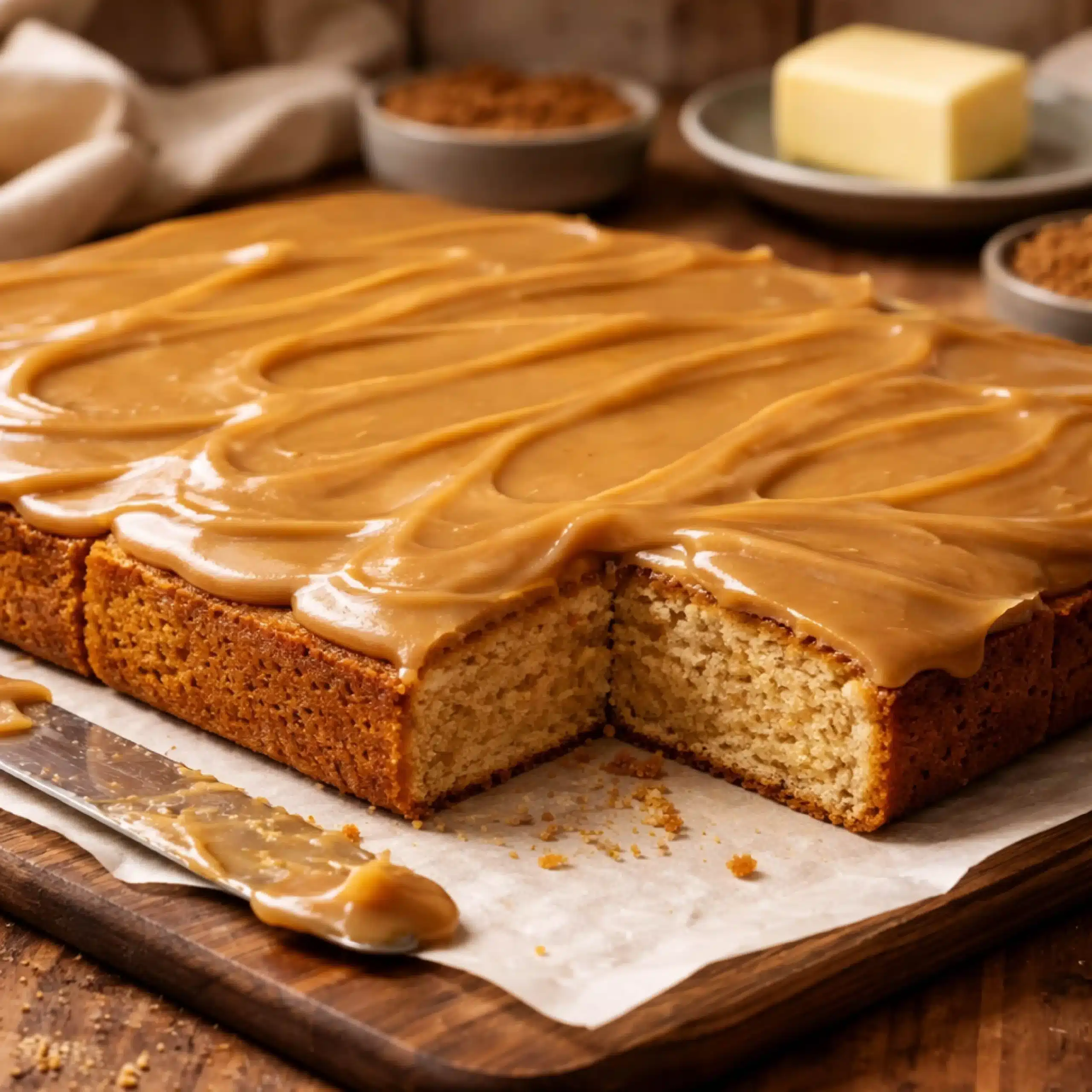
I first fell in love with brown sugar icing on a rushed weeknight when I needed something warm and forgiving to spread over a simple sheet cake before dinner dishes piled up. I remember standing in my kitchen, butter already soft, kids asking questions, and realizing I didn’t have powdered sugar. Instead of panicking, I reached for brown sugar. That moment stuck with me. It felt a little rebellious, a little cozy, and very real. This kind of icing doesn’t try to be perfect. It melts slightly, smells like caramel, and somehow makes even a plain cake feel finished.
Print
Brown Sugar Icing
- Total Time: 15 minutes
- Yield: About 1½ cups (enough for one 9×13 cake or loaf cake)
Description
A warm, caramel-style brown sugar icing made with simple pantry ingredients. Soft, glossy, and perfect for everyday cakes, snack bars, and loaf cakes.
Ingredients
½ cup butter
1 cup brown sugar (light or dark)
¼ cup milk or cream
1 teaspoon vanilla extract
Instructions
Add the butter and brown sugar to a saucepan set over medium-low heat.
Stir gently until the butter melts and the sugar dissolves into a smooth mixture.
Pour in the milk or cream and continue stirring until fully combined.
Remove the pan from the heat and stir in the vanilla extract.
Let the icing cool slightly to thicken, then spread over cake while warm.
Notes
The icing will thicken as it cools, so don’t wait too long before spreading.
If it thickens too much, add milk one teaspoon at a time.
Use gentle heat only—boiling can cause graininess.
- Prep Time: 5 minutes
- Cook Time: 10 minutes
- Category: Dessert Topping
- Method: Stovetop
- Cuisine: American
Table of Contents
Why Brown Sugar Icing Feels Different (and Better)
What makes brown sugar icing unique
Brown sugar icing isn’t just white icing with a color change, and it’s different from traditional brown sugar frosting in both texture and how it sets. It behaves differently from the very first stir. Because brown sugar contains molasses, the icing turns softer, warmer, and more flavorful as it comes together. That molasses note matters. It adds depth without asking for extra ingredients or extra time.
I like how brown sugar icing spreads instead of sitting stiffly on top of a cake. It relaxes. Sometimes it sinks slightly into the crumb, especially on snack cakes or quick breads, and I honestly prefer it that way. The flavor leans caramel-like, not overly sweet, which helps when you’re icing something simple like a vanilla loaf or a pan of banana bars.
You’ll notice it also sets differently. Instead of forming a dry crust, it stays faintly glossy. That’s not a flaw. That’s the point.
How it fits into real-life baking
This icing works best when baking feels practical, not precious. I use it on weeknight desserts, not celebration cakes that need sharp edges. It’s especially good on recipes from my favorite everyday sections, like the snack cake category or quick loaf cakes on PinkHeartCake.
Because brown sugar icing doesn’t rely on powdered sugar alone like a classic powdered sugar frosting, it’s more forgiving if measurements aren’t perfect. If the kids distract you mid-pour, it still turns out fine. I’ve made it thinner for drizzling and thicker for spreading, sometimes in the same week.
And honestly, I just like it more than classic vanilla icing. That’s personal. It feels warmer. Less fussy. It belongs on recipes like simple chocolate cake, spice cake, or even a humble yellow cake that needs something extra without becoming complicated.
It’s not fancy. It’s reliable. That matters.
How Brown Sugar Icing Comes Together So Smoothly
The basic building blocks that matter
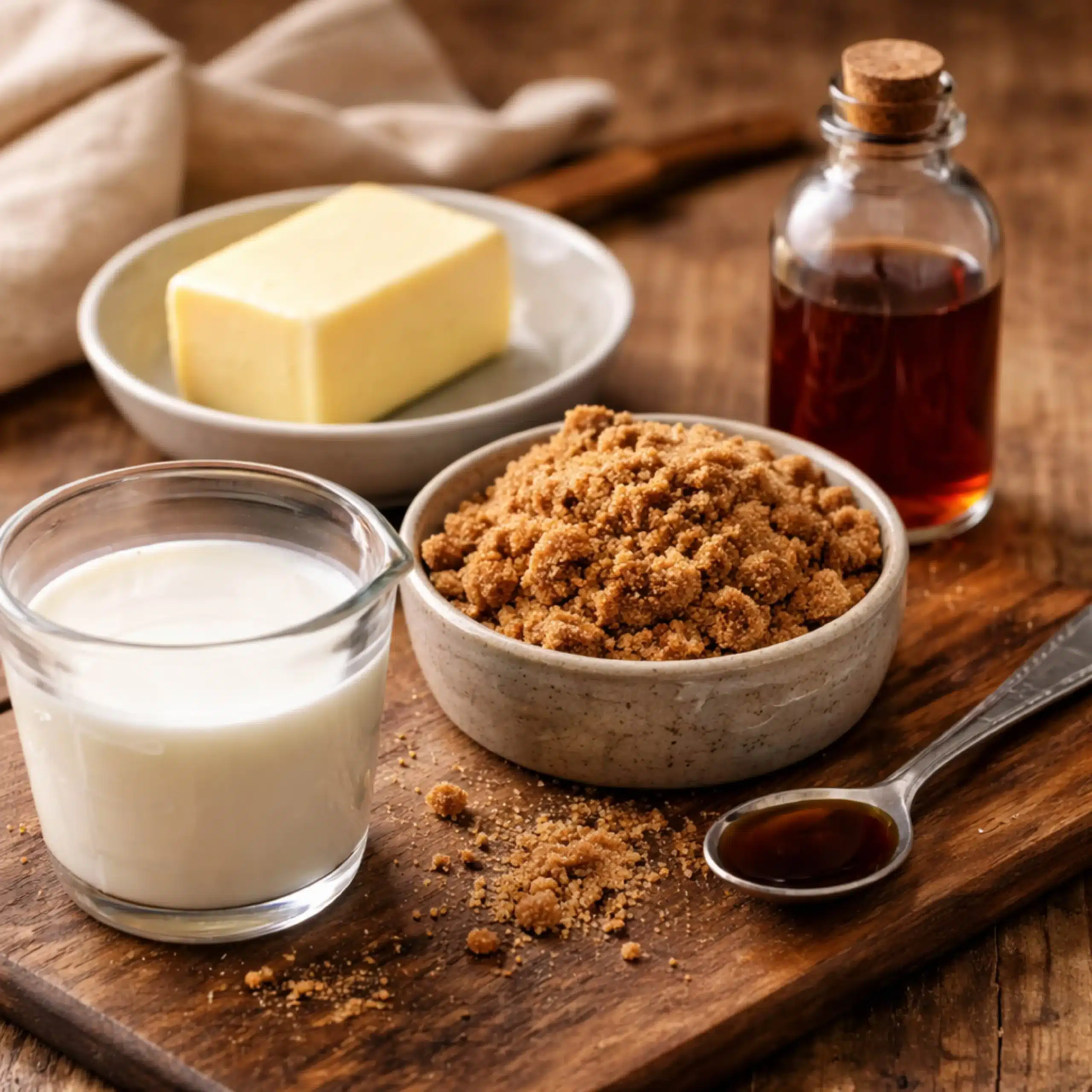
At its core, brown sugar icing relies on just a few pantry staples: butter, brown sugar, milk or cream, and a touch of vanilla. That’s it. No powdered sugar mountains. No sifting. The method matters more than the ingredient list.
Brown sugar needs heat. That’s the biggest difference when making brown sugar icing. Instead of creaming everything cold, you gently melt the butter with the sugar so the granules dissolve. This step turns gritty crystals into a smooth base. Skip it, and the texture never quite fixes itself. I learned that the hard way once and didn’t bother trying to save it.
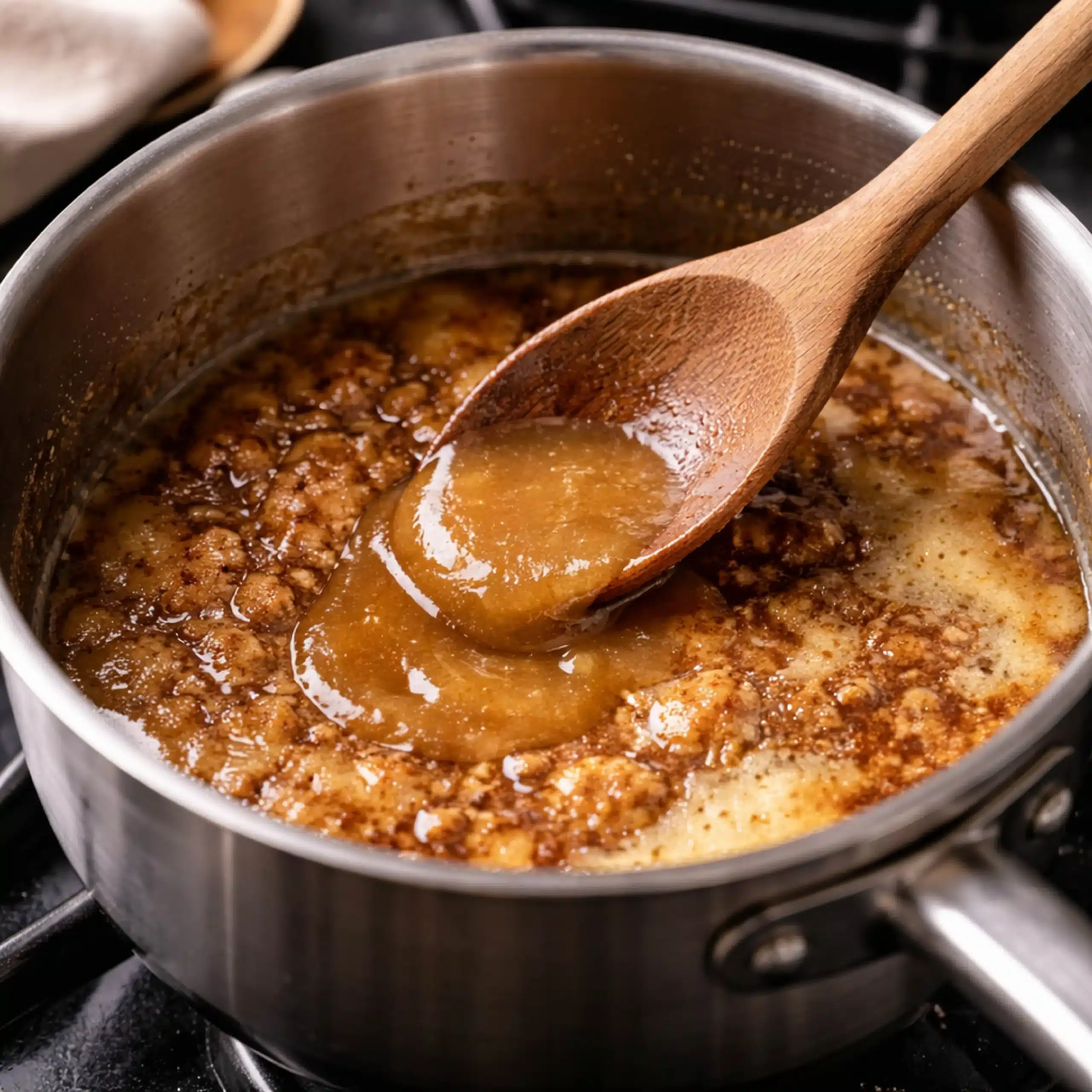
Once the sugar melts, the icing thickens as it cools. That timing window is important. Too hot, and it slides right off the cake. Too cool, and it sets up fast. There’s a sweet spot in the middle that feels forgiving once you’ve done it a couple times.
Texture control without stress
One thing I appreciate about this icing is how adjustable it is. A tablespoon of milk can change everything. If it feels stiff, loosen it. If it’s too thin, let it sit for a minute. Brown sugar icing doesn’t punish small mistakes, which is probably why I trust it on busy baking days.
I usually aim for a soft, spreadable texture that slowly settles on its own. Not stiff peaks. Not a drizzle. Somewhere in between, where brown sugar icing spreads easily but still holds enough body to feel intentional.
Sometimes I prefer it slightly thinner so it seeps into the top of the cake. That’s not technically “correct,” but I like how it tastes the next day. It keeps the crumb soft. That alone makes it worth repeating.
Best Uses for This Warm, Caramel-Style Icing
Cakes and bakes it truly shines on
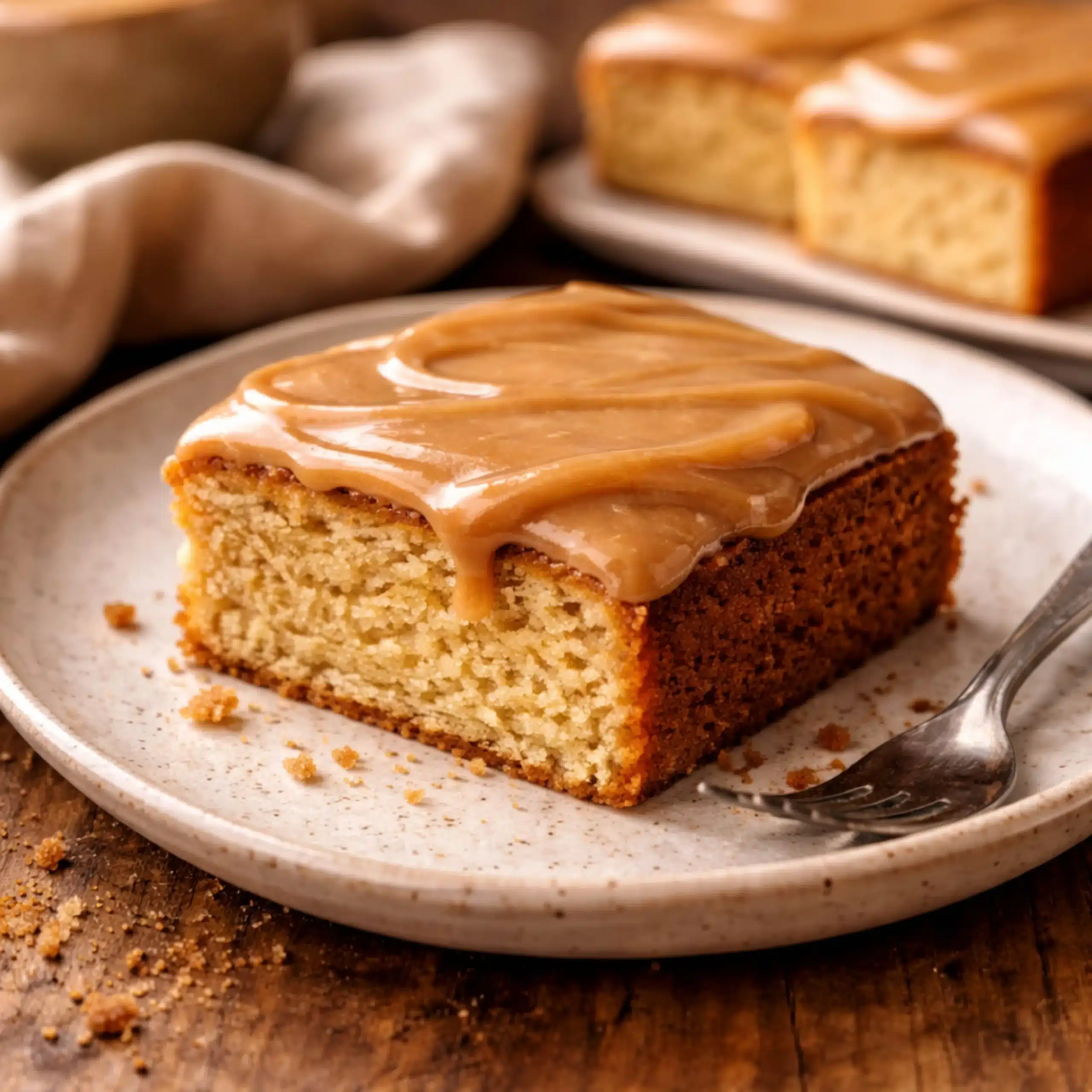
This style of icing loves simple cakes. I reach for it when baking anything that already has warmth built in, like spice cake, banana cake, or an easy applesauce sheet cake. The molasses notes in brown sugar icing echo those flavors instead of competing with them.
I especially like brown sugar icing on snack cakes baked in a 9×13 pan. You don’t need neat edges or perfect swirls. You just spread it while the cake is still a little warm and let it do its thing. It settles. It glosses. It smells incredible.
It’s also surprisingly good on breakfast-style bakes, especially when paired with simple fillings like pistachio cream for contrast. Think coffee cake, cinnamon muffins, or even a plain buttermilk loaf. I don’t always call those “dessert” in my house, but no one complains.
Chocolate cakes work too, especially lighter chocolate flavors. The caramel tone of brown sugar icing balances cocoa without overpowering it. I wouldn’t use it on a very rich fudge cake, though. That’s just my preference.
When it’s not the right choice
This isn’t the icing for piped decorations or layer cakes that need structure. It won’t hold roses or sharp edges, and that’s okay. If you want something tidy and stiff, this isn’t it.
I also skip it for very sweet cakes. Paired with something already sugary, it can feel like too much. That’s rare, but it happens.
Still, for everyday baking, this icing earns its spot. I come back to it more than I expect.
Choosing the Right Brown Sugar and Avoiding Common Issues
Light vs dark brown sugar in icing
Both types work, but they don’t behave the same. Light brown sugar makes a softer, milder result, while dark brown sugar brings a deeper molasses flavor and a slightly darker color. That difference shows up clearly in brown sugar icing, especially once it cools and sets.
I usually reach for dark brown sugar when the cake itself is plain and needs extra warmth. Light brown sugar works better when the cake already has spice or sweetness built in. If you’re new to making brown sugar icing, light brown sugar is often easier. It melts faster and feels more predictable on the stove.
No matter which you choose, fresh sugar matters. If it’s dried out and clumpy, the icing won’t smooth out properly. I don’t bend on that rule.
Common problems (and simple fixes)
Grainy texture usually means the sugar didn’t dissolve fully. Gentle heat fixes that. Warm and slow works best. Boiling doesn’t help and usually makes things worse.
If brown sugar icing turns too thick, add milk one teaspoon at a time. If it’s too thin, let it cool for a minute before touching it again. Stirring constantly can actually break the texture. I’ve learned to step back instead.
Sometimes it sets faster than expected. That happens. Spread what you can and move on.
Frequently Asked Questions
Can you use brown sugar instead of powdered sugar for icing?
Yes, but the process changes. Brown sugar needs heat to dissolve properly, so the icing is cooked briefly instead of mixed cold. That’s why brown sugar icing feels softer and more glaze-like than traditional powdered sugar frosting.
What is brown sugar icing good for?
It works best on everyday cakes, snack bars, and loaf cakes where a relaxed finish makes sense. I usually reach for it when I want something warm and unfussy rather than sharp or decorative.
What to mix to make brown icing?
Butter, brown sugar, milk or cream, and vanilla are enough. The color comes naturally from the sugar’s molasses, so there’s no need for food coloring.
What kind of brown sugar works best in icing?
Light brown sugar melts a bit easier and tastes milder. Dark brown sugar adds more depth. I use both, depending on the cake and my mood that day.
Conclusion
This icing fits the kind of baking most of us actually do. Simple cakes. Busy days. No pressure to make things perfect. I keep coming back to it because it feels reliable and familiar, the way good home baking should. If you enjoy recipes like this, I share everyday baking thoughts and small wins over on my Facebook page. I also save cake ideas and quick inspiration on Pinterest when life feels full. Baking doesn’t have to be complicated to feel good. Sometimes this is enough.