
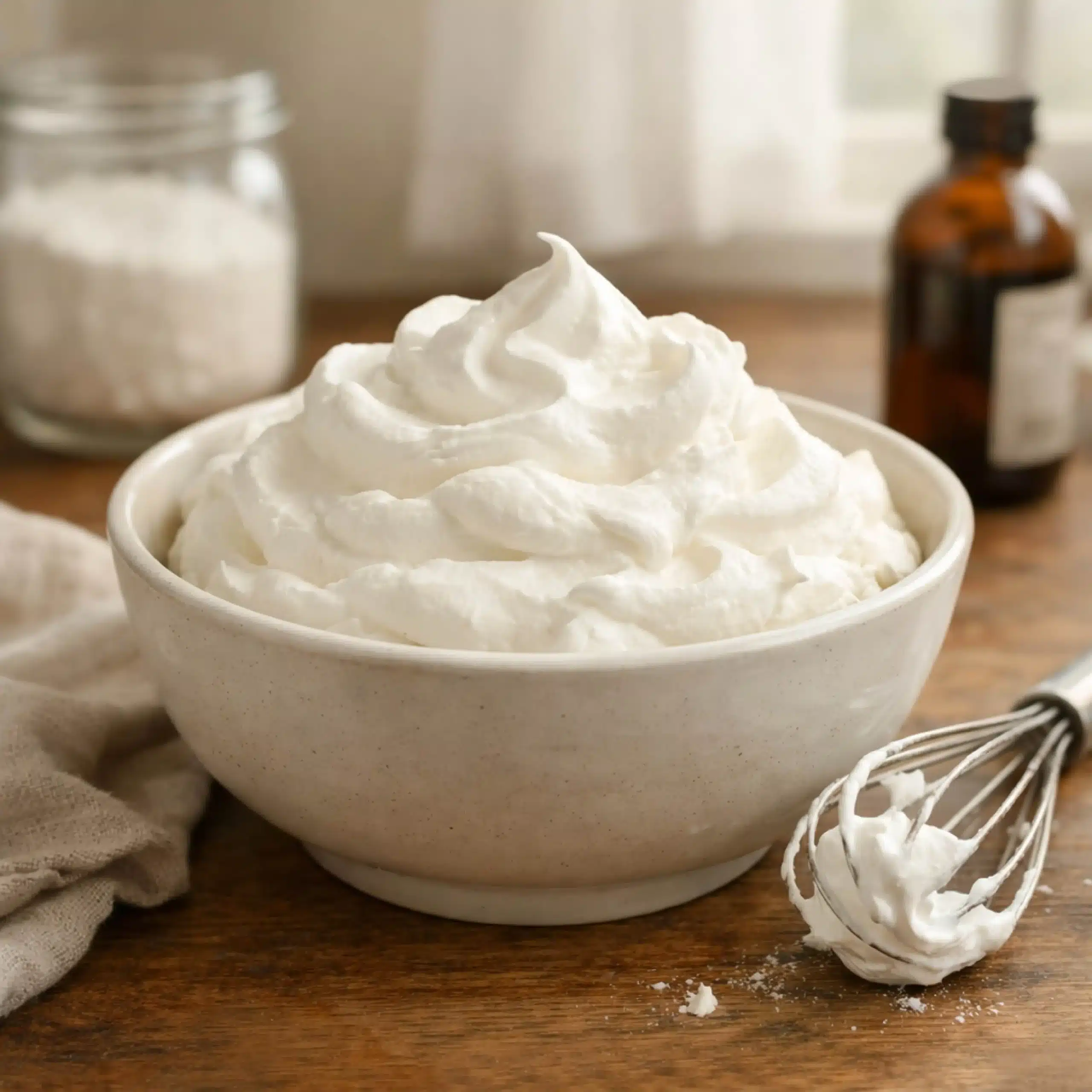
Vegan whipped cream first entered my baking routine during a stretch of life when everything felt busy and a little heavy. I still wanted dessert, though. I just didn’t want it complicated or fussy. I remember testing plant-based toppings late at night, the house finally quiet, wondering if I’d miss the richness I grew up with. I didn’t. What surprised me most was how familiar the process felt—chilling a bowl, listening to the mixer hum, watching volume build. Baking stayed comforting. It just shifted slightly. And honestly, that felt right for that season.
I won’t claim every version is perfect. Some are better than others. I have opinions.
Print
Vegan Whipped Cream
- Total Time: 10 minutes
- Yield: About 2 cups
Description
A simple, reliable vegan whipped cream made with coconut cream that whips up light, fluffy, and smooth. This dairy-free topping works well for cakes, cupcakes, and everyday desserts without feeling fussy or overcomplicated.
Ingredients
1 can full-fat coconut cream, chilled overnight
2–3 tablespoons powdered sugar
1 teaspoon vanilla extract
(Optional stabilizer note can be added later if you want, but this keeps it clean.)
Instructions
Chill a mixing bowl and whisk for at least 15 minutes.
Scoop only the solid coconut cream into the bowl, leaving the liquid behind.
Whip on low speed until smooth, then gradually increase speed as it thickens.
Add powdered sugar and vanilla, whipping just until soft peaks form.
Stop whipping early to avoid a grainy texture. Use immediately or refrigerate.
Notes
Coconut cream must be fully chilled or it won’t whip properly.
For best texture, use the whipped cream the same day.
This recipe is lightly sweetened and can be adjusted to taste.
- Prep Time: 10 minutes
- Cook Time: 0 minutes
- Category: Dessert Topping
- Cuisine: Vegan
Table of Contents
Vegan Whipped Cream Basics You Should Know
What vegan whipped cream really is
Vegan whipped cream relies on plant-based fats or proteins that can trap air the same way dairy cream does. That’s the entire goal. Coconut cream, aquafaba, and some commercial dairy-free creams all work because they create structure when whipped correctly. Without that structure, you’re just sweetening liquid.
Texture matters more than flavor here. If the base can’t hold air, no amount of sugar will save it. I learned that the annoying way.
When I’m planning desserts, I think about how the whipped topping needs to behave, especially compared to sturdier options like vegan cream cheese frosting. Will it sit on a cake for hours? Will it be piped? Will it melt into berries? Those answers decide which style I use.
Why homemade versions are worth the effort

Store-bought tubs can be convenient, but they’re inconsistent. Some are overly sweet. Others collapse the second they warm up. When you make vegan whipped cream at home, you control every part of it. Sweetness. Firmness. Flavor.
I like knowing what’s in my bowl. I also like adjusting as I go. Some days I want it soft and barely sweet, especially when I’m pairing it with something rich like pistachio cream. Other days I want structure. Making it myself gives me that flexibility.
Not everyone loves coconut flavor. I do. If you don’t, aquafaba might suit you better. That’s just preference.
Choosing the Right Base for Dairy-Free Whipping
Coconut cream vs aquafaba
When people struggle with vegan whipped cream, it’s almost always a base issue. Coconut cream and aquafaba behave completely differently, even though both can whip. Coconut cream relies on fat. Aquafaba relies on protein. That one difference changes everything.
Coconut cream needs to be cold. Very cold. I usually chill the can overnight and only scoop the solid portion. If it’s even slightly warm, it won’t cooperate. Aquafaba, on the other hand, needs time and patience. It takes longer to whip, and you have to trust that it will eventually thicken. Sometimes I doubt it every single time.
If I’m topping a cake that needs to sit out, I choose coconut. If I want something lighter or less rich, I reach for aquafaba instead.
How intended use affects your choice
I always decide how I’ll use the whipped topping before I start. Piping decorations requires structure. Dolloping onto brownies doesn’t. Folding into mousse is a different situation altogether.
For layer cakes, especially ones with soft crumbs, I want stability. That’s when coconut-based versions shine. For spooned desserts or short-notice treats, aquafaba feels easier and lighter.
I’ll be honest. I don’t love how aquafaba smells before whipping. It fades, but the hesitation is real.
This decision-making process reminds me a lot of choosing frostings in general, like when I decide between something light or a deeper option such as brown sugar frosting. Buttercream, glaze, whipped topping—they all have a role. Vegan versions are no different.
Getting Vegan Whipped Cream Texture Right Without Stress
Why technique matters more than speed
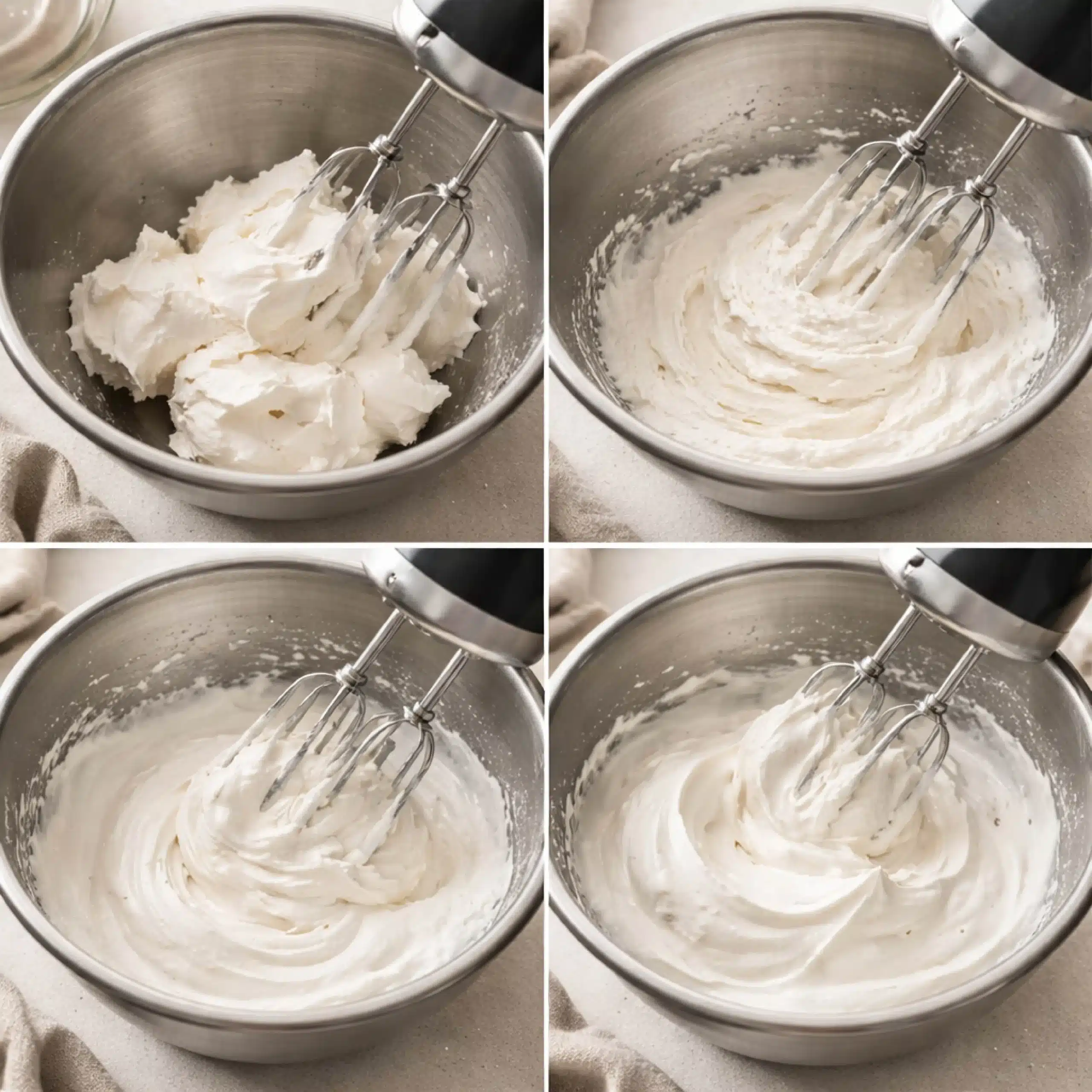
Most vegan whipped cream failures come from rushing the process. I’ve done it myself, usually when I’m multitasking or trying to finish dessert before everyone gets impatient. Vegan whipped cream needs time to build structure, especially when you’re not working with dairy fat.
I always start whipping vegan whipped cream on low speed. This helps the base trap air evenly instead of forming weak bubbles that collapse later. Once it thickens, then I slowly increase speed. Jumping straight to high almost always leads to disappointment.
Cold tools make a real difference. A chilled bowl and whisk give vegan whipped cream a better chance of holding its shape, particularly with coconut-based versions. Aquafaba is more forgiving, but even then, consistency matters. I stop the mixer often, look at the texture, and adjust. Every batch of vegan whipped cream behaves slightly differently.
Some days it’s quick. Some days it tests my patience. That’s just how it goes.
Sweetening and stabilizing vegan whipped cream
Powdered sugar is my go-to for vegan whipped cream because it dissolves easily and adds a bit of stability, similar to how it works in powdered sugar frosting. Liquid sweeteners can work, but they soften the structure. If I use them, I accept that the vegan whipped cream will be looser and best served right away.
Stabilizers are optional. A small amount of cornstarch can help vegan whipped cream hold longer, especially for cakes that need to sit out. I don’t always add it. Sometimes dessert doesn’t need to last more than twenty minutes.
I prefer vegan whipped cream that’s lightly sweetened. Too much sugar overwhelms the cake, and I don’t like that balance. That’s personal, not a rule.
I often stop whipping earlier than recipes suggest. Soft peaks feel safer. Vegan whipped cream doesn’t need to be stiff to be good.
Storing, Serving, and Common Questions
How long vegan whipped cream lasts
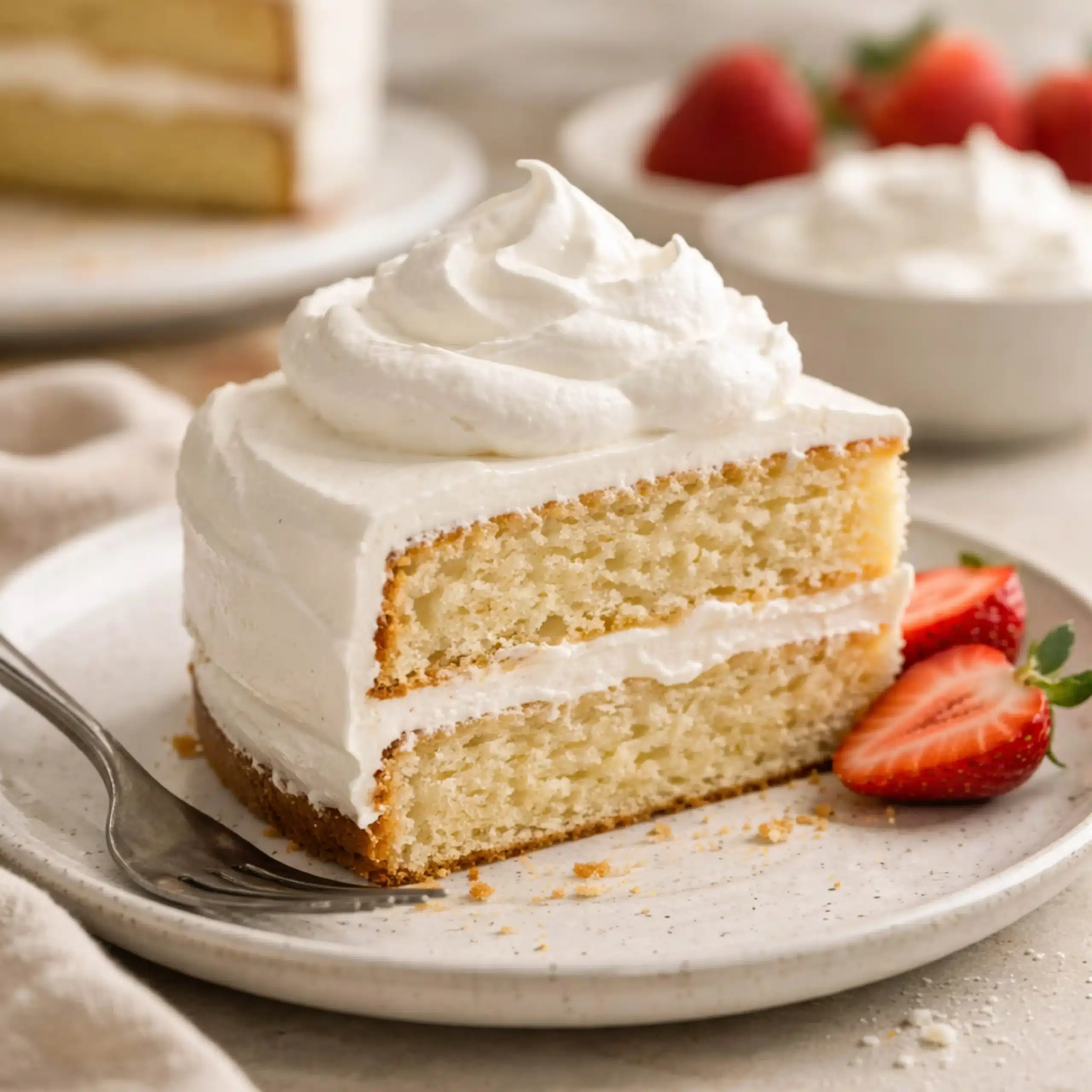
Vegan whipped cream doesn’t behave exactly like dairy, and I think it helps to accept that upfront. Coconut-based vegan whipped cream will firm up in the fridge and usually hold its shape for a day, sometimes two. Aquafaba-based vegan whipped cream is lighter and best used the same day. I rarely push it past 24 hours.
If I know a cake needs to sit out for a while, I stabilize the vegan whipped cream slightly or apply it right before serving. Timing matters more than ingredients here.
I don’t love freezing vegan whipped cream. It technically works, but the texture changes, and that bothers me. I’d rather make a fresh batch.
FAQs About Vegan Whipped Cream
Is there a vegan alternative to Cool Whip?
Yes. Several store-bought tubs exist, but homemade vegan whipped cream gives you better flavor and control. I usually choose homemade when I have time.
Is Trader Joe’s vegan whipping cream discontinued?
Availability changes often. I’ve seen it disappear and reappear. That’s exactly why I don’t rely on it long-term.
What do vegans use for heavy whipping cream?
Full-fat coconut cream is the most common substitute. Some recipes also use blended cashews or commercial dairy-free creams, depending on the application.
Is Reddi-wip cream vegetarian?
Some varieties contain dairy, so they aren’t vegan. I always check labels carefully, even when I think I already know the answer.
A Simple Ending Before You Bake
Vegan whipped cream doesn’t need to feel intimidating or overly technical. Once you understand how it behaves, it becomes just another reliable tool in your kitchen. Some days it’s perfect. Other days it’s good enough. I’m okay with both. That mindset is what keeps baking enjoyable for me, especially on busy weeks.
If you want more low-stress baking ideas, quick cake inspiration, and behind-the-scenes kitchen moments, you can find me sharing regularly on Facebook and Pinterest.
I’m usually baking something simple. Or cleaning up flour. Or both.